Let’s get real for a second—when I started this parts business, I spent way too many late nights on the phone with frustrated mechanics, shop owners, and even weekend gearheads who’d pulled over on the side of the road because their truck or SUV felt… off. Nine times out of ten, the problem came down to one tiny, easy-to-overlook part: the lower ball joint. I know that part better than I know the name of my childhood dog, and today I’m breaking down exactly how to tell if yours is defective—no fancy shop tools required, just common sense and a little patience. Lower Ball Joint

First, let’s talk about what a lower ball joint even does, because if you don’t grasp that, you’ll never recognize when it’s broken. Picture this: your front wheels need to turn left and right, but they also need to bounce up and down when you hit potholes or speed bumps, right? The lower ball joint is the pivot point that connects your steering knuckle (the part the wheel bolts to) to the control arm, which is mounted to your frame. It’s got a smooth bearing inside a metal housing, packed with grease, to keep that pivot moving without grinding. Every time you turn the wheel, every time you drive over a bump, that joint is taking the brunt of the stress. Over time, that grease wears out, the bearing gets loose, and boom—you’ve got a defective lower ball joint.
I’ve seen guys dismiss early warning signs as “just how old trucks feel” or a “normal alignment tweak,” and by the time they bring it to a shop, they’re talking about a $2,000 tow bill or worse. Don’t let that be you. Let’s start with the easiest, most obvious signs, the ones you can pick up just driving down the road.
That’s the first one: strange noises. Not just a little rattle—we’re talking about clunks, creaks, or even a loud bang when you hit a bump or turn the steering wheel. I’ve had a customer tell me his truck sounded like he had a sack of hammers bouncing under the front end whenever he went over a parking block, and sure enough, his lower ball joint had so much play, the bearing was literally sliding back and forth inside the housing. Another time, a van owner complained of a high-pitched squeak that got worse when she turned left; that was the grease seal on her ball joint leaking out, so the metal parts were grinding against each other like two rusty nails. Here’s a trick to test that noise: park on a flat, quiet surface, have a friend sit inside the car to turn the wheel slowly back and forth while you stand at the front. If you hear a clunk or creak right at the wheel, that’s your lower ball joint talking. It’s not friendly.
Next, there’s steering inconsistency. If your car or truck feels like it “wanders” when you’re driving straight, like it’s constantly pulling to one side even if you’re holding the wheel dead center, that’s a big red flag. I’ve had mechanics tell me they blamed tire pressure or alignment for that, and while those can be factors, a worn lower ball joint can throw off your alignment in a heartbeat. Because if the pivot point is loose, your wheel isn’t sitting at the exact angle it’s supposed to. Another steering clue: if the steering wheel feels loose when you’re going slow, like it has more play than usual before the wheel actually responds. Normally, turning the wheel a quarter-inch should make your wheel turn. If there’s half an inch of wiggle before anything happens, that play is likely in your lower ball joint. Last month, a customer came in because his work truck was hard to steer when he was loaded up with tools—his ball joint was so worn, the steering knuckle was shifting instead of turning.
Then there’s the “wiggle test,” the one every mechanic swears by, and it’s dead simple to do at home. You don’t need a lift, just a jack and a jack stand (please, use jack stands—never work under a car that’s only held up by a hydraulic jack, I’ve seen what happens). Here’s how to do it safely: park on level ground, put the car in park (or gear, if it’s manual), and engage the emergency brake. Jack up the front end so the wheels are 6 to 12 inches off the ground, then set jack stands under the frame (not just the control arm or sway bar—those can break). Now, grab the top and bottom of one front wheel, one hand at the top, one at the bottom, and shake it as hard as you can. If the wheel moves more than a tiny, almost unnoticeable amount, that’s play in the lower ball joint. Wait, but how do you tell if it’s lower vs upper ball joint? Good question—grab the left and right sides of the wheel instead (one hand on each side) and shake. If that side-to-side shake is loose, that’s more often the upper ball joint; the up-and-down wiggle is usually lower. I’ve tested hundreds of ball joints over the years, and that up-and-down play is the number one sign of a defective lower one. Last week, a guy did this test on his 4Runner and had almost two inches of play in his front wheel—he was lucky he didn’t lose control on the highway.
And let’s not forget about uneven tire wear. It’s easy to blame a bad alignment for that, but ball joint wear can cause weird tire patterns too. If you notice the inner edge of your front tires wearing way faster than the outer, or cupped, scalloped patches on the tread, that’s a sign your wheels are shifting at odd angles because the ball joint isn’t holding the pivot steady. I had a regular customer who changed his own oil every 3 months but never rotated his tires, and when he finally did, he saw the inner edges of both front tires were bald—turns out his lower ball joint was worn so bad, it was pushing the tire inward every time he drove. He replaced the ball joint, got an alignment, and those tires lasted another 20,000 miles easy.
Wait, what about when it’s really bad? The stuff no one wants to deal with. Severe ball joint wear can lead to the joint separating completely. That’s when the steering knuckle breaks free from the control arm, and you lose all control of that wheel. I’ve heard horror stories from mechanics where this happened at 70 mph on the highway—thankfully, no one got seriously hurt, but the damage was millions of dollars. That’s why paying attention to the early signs is non-negotiable. A $50 ball joint and an hour of labor is way better than a $10,000 tow, repair, and legal bill from an accident.
Now, let’s clear up a common myth: all lower ball joints are the same, right? Wrong. When I’m talking to customers, I always emphasize that replacement matters. Some ball joints are press-fit, some are bolt-on, some are made of cheap steel that rusts in two years, some are forged to handle heavy loads for work trucks. A lot of guys will grab the cheapest ball joint at the auto parts store, but that’s a mistake. A defective ball joint doesn’t just mean bad driving—it’s a safety hazard.
I’ve been in this game for over a decade, and I’ve seen every mistake in the book. The worst one? Ignoring the signs. Another one: replacing only one ball joint. If your lower ball joint is defective, the other one on the same front wheel is probably not far behind. And don’t forget to replace the grease seal when you do it—if the seal is bad, the new joint will get contaminated with dirt and water in no time.
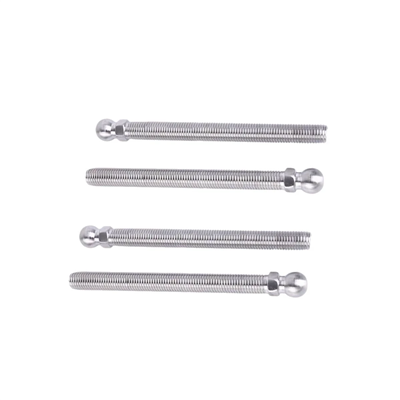
If you’re reading this and checking the signs right now, and you think you might have a defective lower ball joint, don’t wait. Drive slower, avoid sharp turns and potholes, and get it checked by a trusted mechanic as soon as possible. And when you’re ready to replace it, remember that the right part makes all the difference.
Lower Ball Joint At the end of the day, your vehicle’s safety is the most important thing on the road. The lower ball joint is small, but it holds your entire front end together. I’ve spent my whole career making parts that keep drivers safe, because I’ve seen what happens when even the tiniest part fails. If you have questions about inspecting your ball joint, or you need reliable replacement parts, don’t hesitate to reach out. We’re here to help you get back on the road safely, no matter what kind of vehicle you drive.
References
- Automotive Body Repair: Lower Ball Joint Inspection and Replacement, ASE Certification Guide, National Institute for Automotive Service Excellence
- Suspension System Fundamentals, Automotive Technology Textbook, Delmar Cengage Learning
- "Common Suspension Failure Modes and Safety Risks," SAE International Journal of Passenger Cars – Mechanical Systems, 2021
- Tire Wear Patterns: Causes and Diagnosis, Rubber Manufacturers Association Technical Bulletin
Taizhou Huazhe Auto Parts Co., Ltd.
As one of the most professional lower ball joint manufacturers and suppliers in China, we’re featured by quality products and low price. Please rest assured to buy bulk high-grade lower ball joint in stock here from our factory. For pricelist, contact us now.
Address: No. 2828, Binkang Avenue, Sanjia Street, Taizhou Bay New Area, Taizhou City, Zhejiang Province
E-mail: 19906762800@163.com
WebSite: https://www.huazheindustry.com/
