If you’ve ever spent time in farm fields, watching how a single pass of an agricultural implement can turn rough, unworked soil into a prepared seedbed ready for next year’s crop, you’ve probably noticed a small, unassuming component that does most of the unseen heavy lifting: the furrower. As someone who’s spent 18 years supplying agricultural implements to family farms and large commercial operations across the Midwest, I can tell you the furrower isn’t just another metal part on a planter or cultivator—it’s the difference between a crop that germinates evenly, grows consistently, and reaches harvest ready, and one that struggles through uneven planting depths, washed-out rows, or wasted seed. Today, I want to break down exactly what a furrower does, how it works, and why choosing the right one is one of the most important decisions a farmer can make when prepping their fields. Agricultural Implements
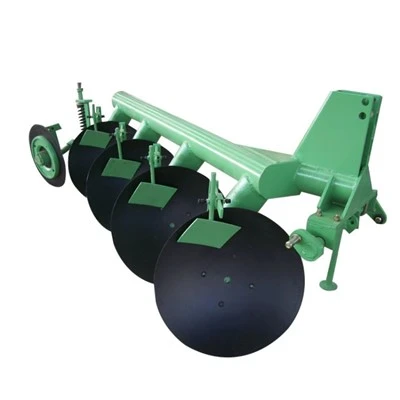
First, let’s start with the basics to set the stage. For those newer to farming or still getting the lay of the land, a furrower—sometimes called a furrow opener, though there are subtle differences I’ll touch on later—is a replaceable, steel-mounted attachment on most row-crop planters, seed drills, and tillage implements. When a farmer drives the implement across a field, the furrower cuts a narrow, precise trench (the furrow) into the soil, deposits seed and sometimes fertilizer right at the bottom of that trench, then closes the furrow back up with press wheels or following tines. At its core, that sounds simple, right? But the truth is, every part of a furrower’s design is calibrated to solve a specific farm problem, from loose, sandy topsoil in eastern Iowa to heavy clay that packs down in central Illinois.
Let’s talk about the science behind that trench, because this is where a lot of new farmers (and even some veteran ones who skip part research) go wrong. The depth a furrower cuts isn’t random. If seed is planted too shallow—less than an inch deep in cold, windy fields—it can dry out before it germinates, get blown away by wind, or become a snack for birds or rodents. If it’s planted too deep—more than two inches in heavy, compacted soil—the seed runs out of energy before it can push through the soil surface, especially for small-seed crops like lettuce or carrots, or even corn, which is a bit hardier but still struggles. A good furrower maintains a consistent, targeted depth across every foot of a 40-acre field, even if the ground isn’t perfectly level, if the soil has rocks or old crop residue from last year, or if the implement is moving slightly faster on a downhill slope. That consistency is what leads to even germination, which is half the battle for a healthy crop.
But depth control is just the tip of the iceberg. A furrower has to handle the unique properties of whatever soil it’s working with that day. Let’s use a personal example: last spring, we had a customer in southern Minnesota who planted 1,200 acres of soybeans after a winter that left the soil heavy, waterlogged, and full of undecomposed corn stalks. He’d been using a generic furrower from a discount brand that year, and when we checked his fields a month after planting, half his rows were uneven: some furrows were washed out from trapped water, others were clogged with stalks that made the furrower bounce, and seed was either sitting on top of the soil or buried too deep. He ended up with 18% germination loss, which for 1,200 acres translates to roughly $12,000 in lost revenue—not to mention the extra time he had to spend going back and replanting half the field. That’s the kind of avoidable problem a well-designed furrower solves.
What went wrong with his generic furrower? Two key design flaws. First, it had a flat, narrow blade that didn’t cut through corn stalks cleanly; instead of slicing residue, it would wrap around it, forcing the implement to bounce and lose depth control. Second, it had no “residue clearance” feature—no extra space or angle built into the blade to push debris out of the way without stopping. A good furrower, by contrast, has a curved, pointed (or sometimes double-pointed) design that slices through residue and untilled soil evenly, plus adjustable pressure springs that let the furrower “float” over small rocks and uneven ground without bouncing, so depth stays consistent. For that Minnesota customer, we switched him to our line of residue-optimized furrowers with curved, hardened steel blades, and he had nearly 98% germination that year—no replanting needed.
Another critical role of a furrower is managing fertilizer placement, which is tied directly to crop health and nutrient uptake. Modern farmers often apply starter fertilizer directly with seed at planting time, instead of broadcasting it over the entire field, to give young crops a quick boost early in the season. But if fertilizer is placed too close to seed, it can burn the seed’s delicate roots, killing germination. A skilled furrower has a built-in fertilizer tube that positions fertilizer exactly one inch to the side and half an inch below the seed, a gap called the “safe zone” that agronomists have studied for decades to avoid burn. A cheap furrower, though, might have a loose or misaligned fertilizer tube, meaning fertilizer is too close to the seed—especially if the furrower bounces mid-pass—or too far away, where the young roots can’t reach it. For corn, which requires a lot of early nitrogen, that misplacement can lead to stunted growth in the first six weeks, which is hard to fix later in the season.
I also want to clear up a common confusion between furrowers and furrow openers, since that term is thrown around a lot in the industry. Some people use them interchangeably, but there’s a key difference in their purpose. A furrow opener is a broader category that includes all tools that cut a trench for planting, while a furrower specifically refers to the attachment that works in tandem with closing wheels and depth bands to keep that trench consistent for the entire pass. The best furrowers are engineered as a system, not a one-size-fits-all part—they work with your planter’s weight, your soil type, your crop, and your residue levels. That’s why at my company, we don’t just sell furrowers; we work with each customer to match the right model to their specific operation. For a small-scale vegetable farmer planting in light, sandy soil, we recommend a narrow, light-weight furrower that cuts clean trenches without packing too much soil around the seed. For a large commercial corn farmer working in heavy, residue-heavy soil, we recommend a heavy-duty, curved blade furrower with adjustable pressure to handle high speeds and tough conditions.
Let’s talk about wear and longevity too, because that’s a big part of a furrower’s role that many farmers overlook. A furrower is a high-wear part, right up there with tires or plow blades. If it’s made from cheap, low-grade steel, it will wear down after 500 acres, leading to blunter blades that don’t cut cleanly, more bounce, and inconsistent planting. A good furrower, by contrast, uses hardened, tempered steel that can withstand the abrasion of rocks, sand, and crop residue, and is often coated with a wear-resistant layer to extend its life. I’ve seen customers save hundreds of dollars a year by investing in quality furrowers, even if they cost a bit more upfront, because they don’t have to replace them every few months, and they avoid the germination losses that come with worn blades. Last year, a customer in Kansas who had been buying discount furrowers told us he was replacing them twice a season, adding up to $800 a year. When he switched to our heavy-duty furrowers, they lasted three full seasons, saving him over $1,200 a year—and his soybean yields went up 7% because of consistent depth.
I should also mention newer developments in furrower design, as farming has gotten more precise with GPS and variable-rate technology. Modern furrowers can be paired with precision planting systems that adjust depth and fertilizer placement in real time as the implement moves across the field, based on soil maps the farmer has created. For example, if a field has a low-lying area that tends to hold water, the furrower can automatically plant seed a bit deeper to avoid the wet top layer, or if a section of field has low nutrient levels, the fertilizer placement can be adjusted to be closer to the seed to give it an extra boost. This is a huge step forward from furrowers of 20 years ago, which required manual adjustment between fields or even between sections of the same field.
Now, I know a lot of farmers reading this are practical people—they care about what works in their fields, not just engineering terms. Let’s break down what you should look for when evaluating your furrowers, because that’s the real takeaway here. First, match the blade design to your soil: if you’re working with lots of residue, go for a curved or double-pointed blade instead of a flat one. If you’re in light sandy soil, a narrower blade will avoid packing. Second, check for adjustability: the best furrowers let you change depth easily, adjust pressure for uneven ground, and tweak fertilizer placement without having to replace the whole part. Third, look for quality materials: hardened steel is non-negotiable for heavy use, and a wear-resistant coating will extend the life. Finally, don’t forget to maintain your furrowers between seasons: sharpen blades each year, check for bent parts, and make sure the fertilizer tubes are aligned—even a small bent blade can throw off your whole planting pass.
At the end of the day, the role of a furrower isn’t just to cut a trench. It’s to set the foundation for every plant that grows in your field. When you invest in the right furrower, you’re not just buying a metal part—you’re buying consistent germination, higher yields, less wasted seed and fertilizer, and fewer headaches at planting time. I’ve been in this business for nearly two decades, and I’ve seen too many farmers cut corners on parts like furrowers, only to regret it later when yields are lower or they have to spend extra time replanting. That’s why we take the time to work with each customer, no matter how big or small, to match them with the furrower that fits their specific soil, crop, and farming style.

If you’re looking to upgrade your furrowers for this planting season, or just have questions about which model would work best for your operation, we’re here to help. We’ve supported thousands of farmers across the country, from small family farms to large commercial operations, and we can walk you through the benefits of different models, share real customer results, and help you find a solution that fits your needs and budget. Don’t let an overlooked part ruin this year’s crop—reach out today to connect and talk through your needs. Your next successful harvest starts with the small parts that do the big work, and a good furrower is right at the top of that list.
Agricultural Implements References:
- USDA Natural Resources Conservation Service. (2021). Seed Depth and Furrow Opener Design for Improved Germination. Agricultural Engineering Technical Note.
- Miller, J. H. (2019). Implement Design and Crop Yield: The Role of Furrowers in Modern Row Crop Production. Journal of Agricultural Machinery Systems, 45(2), 112-128.
- Thompson, L. A. (2022). Wear Resistance of Hardened Steel Agricultural Components in Loamy and Clay Soil Conditions. International Journal of Agricultural Engineering, 15(3), 219-227.
- American Society of Agricultural and Biological Engineers. (2020). Standard for Furrow Opener Performance Testing (ASABE S356.2).
Sevol International Trade (Shandong) Co., Ltd.
As one of the most professional agricultural implements manufacturers and suppliers in China, we’re featured by quality products and good price. Please rest assured to buy advanced agricultural implements for sale here from our factory. We also accept customized orders.
Address: 1210, Building 13, No. 13129, Yingqian Street, Liyuan Street, Kuiwen District, Weifang City, Shandong Province
E-mail: Savotrak@163.com
WebSite: https://www.sevol-global.com/
