If you’ve been looking into adding a CO₂ recovery system to your manufacturing plant, brewery, or food processing facility, you’re probably already aware of the savings and sustainability benefits these devices bring. As a CO₂ recovery device supplier with years of working alongside operations teams to design systems that fit their exact needs, I’ve seen firsthand how skipping a step or underestimating a requirement can turn a promising upgrade into a costly headache. This post breaks down the non-negotiable installation requirements to get your recovery system up and running safely, efficiently, and without delays—no guesswork needed. CO₂ Recovery Device

First, before you even get to the nuts and bolts of mounting the device, you need to nail down the site’s physical space and structural capacity. This sounds basic, but I’ve had clients try to squeeze a 5,000 CFM recovery skid into a utility closet that’s half the required size, only to realize they need to rework floor plans two weeks before installation. Let’s start with the footprint: most standard CO₂ recovery devices aren’t single, compact units—they’re skid-mounted assemblies that include compressors, dryers, filters, and control panels. The space needs to account not just for the unit’s base dimensions, but also clearance for future maintenance. Our team typically recommends 3 feet of clearance on all sides for walkable access, and up to 6 feet on the side where the compressor’s discharge lines run (those heavy lines need room to connect and expand, which they do as they heat up during operation). You also need to check floor loading capacity. A medium-sized recovery unit for a brewery, for example, can weigh between 12,000 and 18,000 pounds when fully plumbed with refrigerant and CO₂. If your facility’s floor is rated for only 100 pounds per square foot, that’s an immediate problem—you’ll need to add reinforcing beams or relocate the unit to a section of the plant designed for heavy machinery. I always advise clients to bring a structural engineer in for a quick review before placing an order; it’s a small step that prevents costly reworks later.
Next, ventilation and air quality are make-or-break for both the device’s performance and on-site safety. CO₂ is denser than air, so even small leaks can pool in low areas like basements, loading docks, or unventilated rooms, creating a suffocation risk for your team. OSHA (Occupational Safety and Health Administration) sets an 8-hour time-weighted average exposure limit of 5,000 parts per million (ppm) for CO₂, and a 15-minute short-term limit of 30,000 ppm—levels that are easy to hit if your installation space doesn’t have proper exhaust. For indoor sites, you need mechanical ventilation that’s sized to replace the air in the room at least 6 to 8 times per hour, with exhaust vents placed at or near floor level (not high on walls, where dense CO₂ won’t reach). If your facility is in an outdoor space, you still need to account for wind patterns; placing the unit in a corner of a building where exhaust fumes can’t blow back into work areas is a must. I also recommend installing CO₂ monitors in the immediate vicinity of the device—they’re cheap insurance against safety incidents, and many of our systems sync with these monitors to shut down operations automatically if levels spike too high.
Plumbing and gas connectivity are another critical set of requirements that vary depending on your source of waste CO₂. Most recovery systems pull CO₂ from two main sources: flue gas from combustion processes (like boiler exhaust in manufacturing plants) and off-gas from fermenters (most common in breweries and wineries). For flue gas sources, the line that feeds the recovery unit needs to have minimal pressure drop—ideally between 0.5 and 2 psi, because too much pressure loss means the unit has to work harder to pull in CO₂, cutting into efficiency. You also need to filter the incoming flue gas to remove particulates like soot, sulfur compounds, and moisture before it enters the recovery skid; if these contaminants get into the compressor or drying system, they’ll cause clogs and shorten the device’s lifespan. For fermenter off-gas, the source lines are usually lower pressure, so you’ll need to install a blower to move the gas to the recovery unit, and you’ll need a way to separate any ethanol or organic compounds that might be mixed in (a common extra step for beverage clients). On the outlet side, the line that carries the recovered, purified CO₂ to your storage tank or process equipment needs to be rated for compressed gas, with proper pressure relief valves installed every 50 feet or so to prevent overpressure. I always work with clients’ in-house piping teams to map these lines during the design phase, so there are no surprises when the install team arrives.
Electrical requirements are often where projects hit their biggest unplanned delays, mostly because teams underestimate the power draw of the recovery system. Most CO₂ recovery devices rely on a central compressor and a series of motorized dryers, fans, and control systems, which together draw between 20 and 150 kilowatts (kW) depending on the size of the unit. A small brewery might need a 25 kW system, while a large chemical manufacturing plant could require a 150 kW or larger skid. The first thing to check is your facility’s incoming power supply: is it single-phase or three-phase? Almost all industrial CO₂ recovery units require three-phase power, and many won’t run efficiently on less than 480V, so you might need to upgrade your building’s electrical panel if it’s only set up for 240V. You also need to account for the start-up load of the compressor—these motors draw 2 to 3 times their normal operating power when they turn on, so your circuit breakers and transformers need to be sized to handle that peak load without tripping. I recommend having a licensed electrician do a quick load calculation before installation; it’s a simple check that can prevent a week-long delay waiting for a panel upgrade. Finally, all electrical connections to the recovery unit need to be grounded properly, and the control panel should have a dedicated disconnect switch for safety, per NEC (National Electrical Code) standards.
Temperature control is a requirement that’s easy to overlook until the system starts underperforming. CO₂ recovery devices have a narrow operating temperature range, usually between 40°F and 90°F. If the space where you install the unit gets too cold, the moisture in the incoming gas will freeze, clogging the filters and lines. If it gets too hot, the compressor will overheat, triggering safety shutdowns or damaging internal parts. That means if you’re installing the unit in an unheated warehouse in a cold climate, you’ll need to add space heating to keep the ambient temperature above 40°F in winter. If you’re placing it near a furnace or a rooftop that gets direct summer sun, you’ll need shading or additional ventilation to keep it below 90°F. For clients in very hot or very cold regions, we often work with them to add dedicated heating or cooling lines tied directly to the recovery unit’s control system, so it automatically adjusts if temperatures drift outside the safe range. I once had a craft brewer in Minnesota install their 30 kW system in an uninsulated garage, and by mid-January, the lines froze solid—we had to come back with a heating element, which cost them a week of production. That’s the kind of mistake a little pre-install temperature planning would have avoided.
Regulatory and documentation requirements are the final, often most overlooked piece of the puzzle. CO₂ recovery systems fall under multiple regulatory agencies, depending on where your facility is located and what type of business you run. In the U.S., the EPA (Environmental Protection Agency) regulates air emissions from flue gas sources, and many states have additional rules around the handling and storage of compressed CO₂. OSHA’s safety rules apply to the on-site operation, as I mentioned earlier, and the NFPA (National Fire Protection Association) has standards for storing compressed gas cylinders, which you’ll need if you’re storing the recovered CO₂ in small tanks. On the documentation side, you’ll need to make sure your facility has the proper permits to modify gas handling systems, and many utilities offer rebates for energy-efficient equipment like CO₂ recovery devices, which require proof of proper installation from a licensed technician. We provide every client with a full installation manual, as-built drawings, and a compliance checklist tailored to their location and industry, but I always advise clients to check with their local building department before ordering their system—some areas require a pre-install inspection for gas handling equipment, and you don’t want to delay your project because you skipped that step.
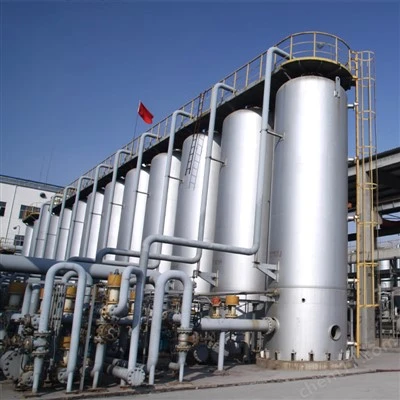
At the end of the day, installing a CO₂ recovery device is a big investment, and getting the requirements right the first time saves you time, money, and stress down the line. Whether you’re a small brewery looking to cut gas costs or a large manufacturer reducing emissions, taking the time to confirm your space, structural capacity, ventilation, plumbing, electrical, temperature, and regulatory needs before installation will ensure your system runs at peak efficiency for years. If you’re ready to talk through what your specific facility needs, we’re here to walk you through every step of the process, from initial site assessments to final setup. Reach out to our team to start planning your CO₂ recovery upgrade today.
Small Air Separation Unit References
Occupational Safety and Health Administration. (2024). Carbon Dioxide (CO₂) – Guidelines for Safe Workplace Exposure. U.S. Department of Labor.
National Electrical Code (NEC). (2023). Article 440: Electrical Installations for Compressors and Condensers. National Fire Protection Association.
Environmental Protection Agency. (2022). Best Practices for CO₂ Recovery from Industrial Flue Gases. U.S. EPA Office of Air and Radiation.
American Society of Heating, Refrigerating and Air-Conditioning Engineers (ASHRAE). (2023). Standard 15: Safety Standards for Refrigeration Systems. ASHRAE.
Xinxiang Jiale Intelligent Equipment Co., Ltd.
As one of the most professional co₂ recovery device manufacturers and suppliers in China, we’re featured by quality products and good service. Please rest assured to buy durable co₂ recovery device for sale here from our factory. We also accept customized orders.
Address: No.3913, 9th Floor, Unit 3, East Commercial and Office Complex, Baolong City Plaza, Hongqi District, Xinxiang City, Henan Province, China
E-mail: cc2397410@gmail.com
WebSite: https://www.jiale-asu.com/
