Hey everyone, Sarah here, co-owner of Curved Carport Co. – yeah, the guys you’ve probably seen rolling out those sleek, aerodynamic curved carports that don’t just look good but also stand up to more wind and rain than traditional straight-roof ones. Lately, I’ve been getting so many DMs and calls from customers asking the same question: “Can a curved carport be painted?” It makes total sense, right? You pick a curved structure because it’s different from the boring generic carport everyone else has, then you want to make it match your house, your fence, your whole vibe. But curved panels aren’t like flat wooden fences or straight metal gates – they bend, they curve, they’ve got that rounded shape that makes people wonder if paint will even stick, or if it’ll crack or peel. So today, I’m breaking this down for real, no corporate jargon, just what we’ve learned working with curved carports every single day for the past 7 years. Curved Carport
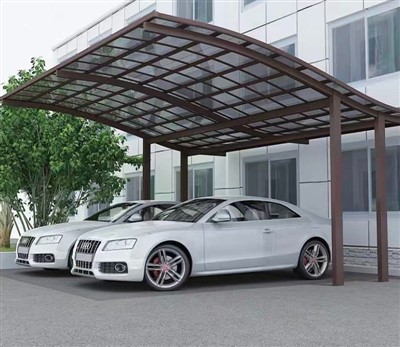
First off, let’s get one thing straight: curved carports can absolutely be painted. But it’s not as simple as grabbing a random can of spray paint from the hardware store and going to town on your new garage carport (wait, no, that’s the curved one for your car, duh). The curve is actually the biggest thing to consider here, and it’s not because paint can’t bend – it’s because the surface of your curved carport is already engineered to bend, so if you don’t prep it right, the paint will move with the curve in all the wrong ways, or just slide right off.
Let’s start with what most curved carports are made of, because that changes everything. We mostly sell metal curved carports – either galvanized steel or aluminum, because those are the most durable for outdoor use, especially for curved panels (they bend easily without cracking, unlike some other metals). But some cheaper curved carports are made of PVC or even fiberglass, which is a whole different story. So first step: figure out what your carport’s surface is made of. Most of the time, if it’s from a reputable supplier like us, it’s either galvanized steel or powder-coated aluminum. Powder coating is a big one – that’s the baked-on finish that comes standard on most curved metal structures these days, and it’s way more durable than regular paint.
Now, why can’t you just paint over powder coating? A lot of people try that, and it’s a disaster. Powder coating is super smooth and non-porous, so regular paint doesn’t have anything to grip onto. You can sand it, sure, but sanding a curved panel is way harder than sanding a flat one – you’ve got to sand along the curve, not back and forth, otherwise you’ll end up with uneven surfaces and spots that still don’t stick. I’ve seen a customer do this last year, tried to paint his aluminum curved carport navy blue over the original silver powder coat, and within a year, the paint was peeling along the curved edges where the flex was the most. That’s not to say it’s impossible, but it’s way more work than prepping a bare metal surface.
If your curved carport is bare metal (not powder-coated, not painted), that’s the easiest scenario. But even then, metal curves have that little bit of give, right? So you need paint that can flex, not just stick. Regular latex paint is out – it dries too rigid, and when the metal bends a little in heat or cold (which curved carports do all the time, especially in hot or cold climates), the paint cracks. What works best here is 100% acrylic latex exterior paint that’s labeled as “flexible” or “elastomeric”. Elastomeric paint is basically a thick, rubbery paint that stretches with the surface, so no cracking, even when it’s flexing from the curve. We tested this ourselves a few years back – we had a batch of demo curved panels, painted one with regular acrylic, one with elastomeric. Left them out in Phoenix for a year, where temperatures swing from 20°F in winter to 110°F in summer. The regular paint on the flat parts cracked, the curved peaks and valleys peeled. The elastomeric? Still looking good. That’s the stuff you want.
Wait, but what about older curved carports? Like, if you bought one 10 years ago, and it’s now faded and chipped, can you repaint that? Absolutely, but again, prep is key, especially on curved surfaces. First, you’ve got to strip all the old, peeling paint or powder coating. For small spots, sanding works, but if the whole thing is chipped, you might need a pressure washer (on low setting, though – high pressure can ding the curved metal and mess up the shape). Then, you’ve got to prime it. Not just any primer – a metal primer that’s also flexible. Because if you skip the primer, the new paint won’t stick, and it’ll peel off with the old paint. We always recommend a bonding primer for metal surfaces that have been painted before, because it’s designed to stick to smooth or old surfaces without sanding too hard. On curved panels, sanding is tedious, so a good bonding primer saves you so much time.
Now, the tricky part: applying paint to curved surfaces. Spray paint is way easier here than a roller, right? Because a roller will leave streaks, and on a curve, it’s hard to get even coverage without overlapping spots or missing the nooks. But not just any spray paint – exterior, flexible spray paint, specifically for metal. A lot of hardware stores sell spray paints labeled as “for metal and outdoor use” – just double check that they say they’re flexible. We’ve used Rust-Oleum’s Universal line for small touch-ups, and that works pretty well, but for full repaints, we still go back to using an airless sprayer, because it gives even coverage on curved panels that won’t drip. One mistake people make is trying to apply too much paint at once, especially on curves. Thin, even coats are way better than one thick coat. Thick paint will build up in the curved valleys, and when that paint flexes, it’ll crack first. I learned this the hard way when I tried to touch up a customer’s curved carport last winter – I put one thick coat on, and within a month, the edge of the curve had little cracks all along it. Took a few sandings and two thin coats to fix it.
What about non-metal curved carports? Like the PVC or fiberglass ones some people have, especially for smaller carports or patio covers. Those can be painted too, but you’ve got to use paint that’s made specifically for plastic or fiberglass. Regular paint will just peel right off PVC, because plastic is non-porous and doesn’t allow paint to grip. Look for spray paint labeled “for PVC” or “plastic exterior paint”. Again, you’ll need to sand the surface a little to rough it up so the paint sticks, and use a flexible primer if you can find one. Fiberglass is similar – just make sure the paint is rated for exterior fiberglass, since fiberglass can flex a little too.
Now, let’s talk about if you should even paint your curved carport in the first place. Wait, why would I say that, since we sell them? Well, because curved carports are designed to be low-maintenance. Powder-coated finishes last 10-15 years without repainting, right? So if you just got a new curved carport, you might not even need to paint it for a decade. But if you do want to customize the color, it’s doable, just make sure you’re doing it right. Another thing: painting a curved carport doesn’t void most warranties, but you have to follow the manufacturer’s instructions. If you skip prep, use the wrong paint, and it peels, that’s on you, not the warranty. That’s something I always tell customers – read the warranty fine print, and if you’re not sure, ask us before you start painting, not after you mess it up.
Wait, also, climate matters. If you live in a super humid area, like Florida, you need paint that’s mold-resistant, because curved carports can hold a little moisture in the curved crevices, which can lead to mold growing under the paint. Elastomeric acrylic paint with mold inhibitors is perfect for that, because it seals in moisture and prevents mold from growing. If you live in a super dry, sunny area like Arizona, you need paint that’s UV-resistant, because the sun will fade regular paint way faster. Again, elastomeric exterior paint with UV protection is the way to go, because it’s designed to stand up to harsh sun without fading.
I’ve had so many customers come to us frustrated because they tried to paint their curved carport themselves and it looked terrible, or it peeled within a year. Most of the time, it’s because they skipped the prep, used the wrong paint, or applied it incorrectly. The beauty of curved carports is that they’re sleek and unique, but that same curve makes paint application a little different from flat surfaces. It’s not impossible, but it’s not as easy as grabbing a can of paint and going to town.
So, let’s recap the quick do’s and don’ts if you decide to paint your curved carport:
DO:
- Figure out what material your carport is made of (metal, PVC, fiberglass)
- Use flexible, exterior paint (elastomeric acrylic for metal, plastic-specific paint for PVC/fiberglass)
- Prep the surface properly – sand old finishes, use a bonding primer, make sure it’s clean and dry before painting
- Apply thin, even coats, especially on curved edges
- Pick paint with UV or mold inhibitors if you live in harsh climates
DON’T:
- Paint over old powder coating without sanding or using a bonding primer
- Use regular rigid latex paint or interior paint
- Apply thick coats of paint – it will crack along the curve
- Skip prep work – that’s the #1 reason paint fails on curved surfaces
Now, if all this sounds like too much work, or you just want a curved carport that’s already the exact color you want, without having to paint it later – that’s what we’re here for. We custom powder-coat all our curved carports in any color you can think of, from basic black and white to custom colors that match your house’s trim or your favorite team’s colors. No peeling, no messing around, just a finish that lasts for years, and it’s built to flex with the curve of the carport, so it never cracks.
At the end of the day, yes, a curved carport can be painted – but it’s not a beginner DIY project. It takes a little knowledge about the material, the right paint, and a lot of patience when applying it, especially around the curved parts. If you’re not comfortable doing it yourself, there are plenty of professional painters who specialize in metal and curved surfaces, just make sure you hire someone who has experience with that, not just someone who paints houses.

If you’re in the market for a new curved carport, or you want to chat about custom colors or painting your existing one, we’re here to help. Shoot us a message, give us a call, whatever works for you – we’ll answer all your questions, no sales pitch, just honest advice. No jargon, no confusing terms, just what you need to know to get that curved carport looking exactly how you want it.
Adjustable Louvered Pergola References:
- Outdoor Metal Finishing Association. (2021). Best Practices for Painting Metal Curved Outdoor Structures.
- Elastomeric Coatings Manufacturers Association. (2022). Flexibility Requirements for Paint on Curved Surfaces.
- PVC Pipe & Fittings Association. (2020). Painting Guidelines for Exterior PVC Structures.
Guangdong Fanxi Youpin Intelligent Technology Co., Ltd.
We are one of the most professional curved carport manufacturers and suppliers in China, also support customized service with low price. We warmly welcome you to buy high quality curved carport for sale here from our factory. If you have any enquiry about pricelist, please feel free to email us.
Address: No. 22-2 Of Xiaodong Industrial Zone, Xiaodong Second Economic Society, Yanfeng Community, Shishan Town
E-mail: SunnyChueng@fshpyp.cn
WebSite: https://www.vancyoutdoor.com/
