Hey everyone, if you’re in the aggregate, mining, or recycling industry, you know a crusher rotor is basically the heart of your whole crushing setup—and let’s be real, a wonky rotor will shut down your production faster than a clogged feed chute. As a rotor supplier, I field questions all the time from folks who want to know what makes a good, durable rotor, not just the cheap ones that crumble after a week. Today we’re breaking down the key components that make a crusher rotor work, why each matters, and how cutting corners on any one part is a recipe for headaches. Crusher Rotor
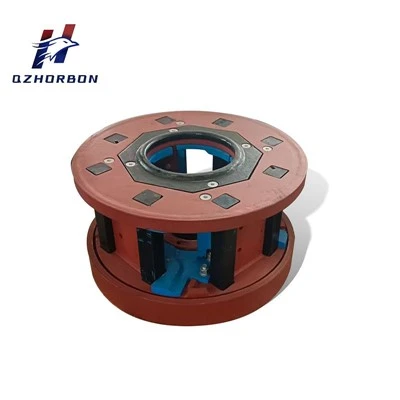
First off, let’s start with the main body—no, not just a hunk of steel, the rotor core. This is the backbone, right? It’s what all other parts bolt or weld onto, so it has to handle insane torque from the motor and the constant impact of materials slamming into it. Most standard cores these days are made from high-tensile carbon steel, but for heavy-duty jobs (like crushing granite or mining ore), we go with alloy steel that has way better wear resistance. Wait, why not just use regular steel? Because regular steel bends or cracks under that constant stress—we’ve seen clients switch from cheap cores to our alloy ones and cut core replacements by 70% easy. Also, the core has a precision machined bore that locks onto the crusher’s main shaft—if that’s off by even a millimeter, you get unbalanced rotation, which causes vibration, wears out bearings fast, and can even destroy the whole rotor over time. Trust me, we’ve fixed plenty of rotors where a sloppy bore was the root problem.
Next up: the blow bars. These are the parts that actually hit the material, so they’re the workhorses of the rotor. Every time someone asks what makes a rotor perform, blow bars are the first thing I mention. There are a few types, too—for recycling (like concrete or asphalt), we use martensitic steel blow bars because they’re tough enough to handle rebar and concrete chunks. For mining, high-chrome iron blow bars are better because they resist abrasion from hard rock way longer. Wait, but don’t get stuck on one type—some clients mix it up: if they’re crushing soft limestone most days but need to do occasional recycling jobs, we can make interchangeable blow bars so they don’t have to buy a whole new set every time. One mistake I see all the time is people going for the cheapest blow bars they can find—those wear down in days, so you’re spending more on replacements than you would on quality ones long run.
Then there’s the mounting hardware that holds the blow bars to the core: retainer bars, locking pins, and the wedges. A lot of suppliers skip explaining these, but they’re make-or-break. If your blow bars come loose mid-crush, they can fly out, damage the crusher housing, or even cause safety issues. Our retainer bars are made from heat-treated steel, and we use precision-machined locking pins that lock into slots on the core—no wiggling, no slipping. Some cheaper suppliers use generic pins that bend, so clients have to replace them every couple of weeks. We also add a safety feature: a small grub screw that secures the pin even if the retainer bar wears a little, so you don’t have to shut down for a quick fix every shift.
Wait, let’s not forget the balance system. Balancing the rotor isn’t just a “nice to have”—it’s critical. An unbalanced rotor causes vibration that travels through the whole crusher, wearing out motors, shafts, and bearings way faster. How do we balance a rotor? First, we weigh each component (blow bars, retainers, even small hardware) before installing them, then adjust the weight if needed. For example, if one blow bar is a little heavier, we machine a small notch on the opposite side of the core to even it out. We also do a dynamic balance test at 110% of the operating speed—no shortcuts here. I’ve had clients come to us with rotors they bought elsewhere that were off balance, and when we rebalanced them, their bearing life went from 3 months to 18 months. That’s a huge cost saving right there.
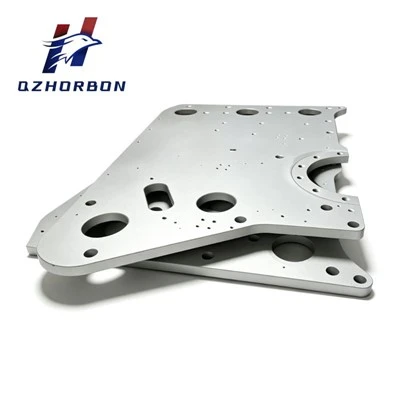
Another part that’s often overlooked: the end plates. These are the circular plates welded to both ends of the core, right? They keep the blow bars from sliding off the sides, and they also shield the core from material that might slip past the blow bars. Cheap end plates are thin, so they get dented or warped quickly, which lets blow bars shift. Our end plates are 1.5 inches thick (customizable for heavy jobs) and made from the same alloy steel as the core, so they stand up to constant impact. We also add reinforcing ribs on the inside of the end plates—more material where it’s needed most, without adding extra weight that would mess with balance.
Oh, and let’s talk about wear protection liners for the core. Some guys call them liners, some call them armour plates—whatever you name them, they’re the parts that cover the core between the blow bars. When material bounces around inside the rotor, it can wear away at the core over time, so these liners act as a sacrificial layer. If you don’t have them, you’ll end up with a hole in your core and have to replace the whole rotor, not just the liners. We use cast manganese steel liners here—they work-harden when hit, so they get harder the more they’re used, which makes them way more durable than standard steel. A few clients told me they skipped liners once and had to replace their core in 2 months; now they use our liners and they last 12+ months.
Wait, should I mention something about heat treatment? Yeah, that’s a process that ties all these parts together. Every component—core, blow bars, end plates—needs to be heat-treated properly to get the right hardness and toughness. If you skimp on heat treatment, blow bars will crack, cores will bend, end plates will warp. A lot of budget suppliers do a quick, cheap heat treatment that doesn’t penetrate the whole part, so the outside is hard but the inside is soft, and they break fast. We do full heat treatment for every part, so even the middle of a blow bar is tough enough to handle impact, not just the surface. I’ve seen a client blow a set of cheap blow bars in one shift because their heat treatment was garbage, and ours lasted 3 shifts for the same job.
Now, let’s circle back to why this matters for you as a buyer. A crusher rotor isn’t a one-size-fits-all part. If you’re crushing 100% soft asphalt for recycling, you don’t need the same rotor as someone mining hard iron ore. That’s why we customize every rotor we make—we talk to you about your material, your production rate, your maintenance schedule, and adjust each component (blow bar type, core thickness, liner material) to fit. A lot of generic rotors you find online are made for one specific job, so they fail when you use them for something else.
I get it, when you’re in the middle of a project, you just need a rotor that works, no nonsense. That’s why we don’t do “good enough” parts. Every component we use is tested before it leaves our shop—we balance it, check the welds, test the blow bar mounting, so you don’t have to deal with unexpected downtime. We’ve had clients tell us their old rotors would break down twice a month, and ours have gone 6 months without a major issue. That adds up to way less lost production, which is the biggest cost for any operation.
Wait, let’s make sure I didn’t miss any key parts. Oh, maybe the lubrication points? The main shaft connection has grease fittings to keep the bearings lubricated, right? Yeah, that’s a small detail, but it matters. Our rotors have easy-access grease fittings so your maintenance team doesn’t have to struggle to reach them—no crawling into tight spaces to grease bearings. That’s a small thing, but it saves time during maintenance, which is another win.
At the end of the day, the key components of a crusher rotor aren’t just random parts stuck together—each one is designed to work with the others. Skip a good core, and everything else breaks fast. Use cheap blow bars, and you’re replacing them every week. Cut corners on balance, and you’re wasting money on bearings and motors. As a supplier, we don’t just sell you a rotor—we make sure all these components are optimized for your specific job, so you get the most out of your crusher.
If you’re tired of rotors that let you down, or you’re planning a new setup and want to make sure you get the right parts, reach out to us. We can walk through your needs, answer any questions you have, and help you build a rotor that will hold up to your toughest jobs. Don’t settle for generic parts—your production (and your bottom line) deserves better.
Crusher Rotor References
- Mining and Aggregate Processing Machinery: Components, Operation, and Maintenance. Society for Mining, Metallurgy & Exploration, 2021.
- Wear Resistance of Crusher Rotor Components: Material Selection and Heat Treatment Effects. Journal of Materials Engineering and Performance, vol. 30, no. 7, 2021, pp. 4892-4901.
- Recycling Construction Materials: Equipment and Component Durability. National Recycling Coalition Technical Report, 2022.
- Dynamic Balancing Guidelines for Industrial Rotating Equipment. American Society of Mechanical Engineers, 2020.
Quzhou Horbon Mining Parts Co., Ltd.
Quzhou Horbon Mining Parts Co., Ltd. is one of the most professional crusher rotor manufacturers and suppliers in China, featured by high quality customized service and OEM service. Please rest assured to buy premium crusher rotor at competitive price from our factory. Contact us for pricelist.
Address: No.8 Nanshan Road, Qujiang District, Quzhou City, Zhejiang Province, China
E-mail: horbonmining@gmail.com
WebSite: https://www.horbonmachinery.com/
