If you’ve ever stopped to think about how liquid nitrogen, oxygen, or even liquefied natural gas (LNG) stays cold enough to keep its cryogenic state for weeks or months in a storage tank, you’re not alone. As a cryogenic storage tank supplier, I get questions about this all the time—usually from folks who need to store those super-cold liquids but don’t want them warming up (and turning back into gas, which is not only a waste but can be dangerous). Let’s break down the heat transfer characteristics that make cryo tanks work, straight from someone who designs, builds, and delivers these tanks day in and day out. Cryogenic Storage Tank

First, let’s get one basic thing out of the way: cryogenic liquids are any that sit below -150°C (-238°F) at normal atmospheric pressure. That’s super cold—way colder than your freezer, even. The big enemy here is heat moving from the warmer environment (like a warehouse floor, the outside air, or even the air in a transport truck) into the tank. Left unchecked, that heat will boil off the liquid, costing you money, wasting product, and potentially creating pressure buildup that could damage the tank. So every design choice we make centers on slowing that heat transfer to a crawl.
Now, how does that heat get in, exactly? There are three main types of heat transfer, and every cryo tank has to fight all three. Let’s go through them one by one, because this is where the science gets practical for anyone looking to store these liquids.
-
Conduction: Heat moving through solid materials
Conduction is the most straightforward—think of how a metal spoon gets hot when you leave it in a boiling pot. For cryo tanks, the main conduction path is through the tank’s walls. That’s why our tanks have a double-wall design: an inner tank made of materials like stainless steel (it’s strong enough to hold the pressure of the cold liquid and resistant to corrosion) and an outer jacket made of carbon steel, spaced a few inches apart. The space between them? We evacuate almost all the air, which eliminates conduction through gases. But even with a vacuum, you still have a tiny bit of heat moving through the supports that hold the inner tank up inside the outer jacket. Those supports are super important—if they were metal bars, that would be a huge heat bridge—but we use low-conduction materials like fiberglass or certain plastics to minimize that. It’s a small detail, but it makes a big difference in reducing heat creep. -
Convection: Heat moving through gases
Convection is when heat is carried by a moving fluid, like how hot air rises in a room. If the space between the inner and outer tank had air in it, that air would circulate, moving heat from the warm outer wall to the cold inner wall and boiling off your cryo liquid. That’s why we pull a high vacuum (around 10^-5 torr, for the nerds out there) between the walls. No air means no convection. Some cheaper tanks might use insulation materials like foam, but foam traps air, which leads to convection—so those tanks have way higher boil-off rates. Our vacuum design cuts convection to almost nothing, which is a key heat transfer characteristic we stand by. -
Radiation: Heat moving through invisible waves
Radiation is the one that people often sleep on, because it doesn’t need a medium—heat from the sun reaches Earth through space, which is a vacuum. So even with no air in the space between the tank walls, radiation will still pass through, carrying heat from the warm outer jacket to the cold inner tank. To fight this, we add layers of radiation shields between the walls. These are thin, shiny aluminum sheets (or sometimes metalized polyester film) spaced a fraction of an inch apart, alternating with small spacers to keep them from touching. This is called multi-layer insulation (MLI), and it’s super effective. Each shield reflects some of the radiation, so by the time the heat gets through 20 or 30 layers, it’s almost nothing. We tailor the number of layers based on how much heat we’re willing to let in—for example, a tank holding LNG (which is around -162°C) needs more layers than one holding liquid nitrogen (-196°C) because LNG is a bit warmer, so radiation is a bigger factor.
Now, let’s talk about how these heat transfer characteristics translate to real-world performance. The big number everyone cares about is the boil-off rate—that’s how much of your cryo liquid turns to gas over time. For a well-designed cryo tank, the boil-off rate is usually around 0.1% to 0.5% of the tank volume per day. A cheaply made tank might have a 2% or higher boil-off rate, which adds up fast. Let’s do the math: if you have a 10,000-gallon tank of liquid oxygen, a 0.5% boil-off rate means you lose 50 gallons a day. At current industrial oxygen prices, that’s hundreds of dollars a week—so choosing a tank with good heat transfer characteristics isn’t just about convenience, it’s about cost savings.
Wait, there’s a few more things that affect heat transfer that aren’t just the walls. One is the size and shape of the tank. Cylindrical tanks (the standard for cryo storage) have less surface area per unit volume than other shapes, right? Surface area is where radiation and convection happen, so less surface area means less heat getting in. That’s why we stick with cylinders—they’re not just easy to manufacture, they’re the most efficient shape for minimizing heat transfer relative to how much liquid you can store. Another thing is the placement of the tank. If you put a tank in direct sunlight all day, that’s extra heat from solar radiation, which means we might add extra radiation layers or even a reflective coating on the outer jacket to bounce that sunlight away. If it’s going outside in a cold climate, the outer jacket is already cold, so we don’t need as much insulation. It’s all about tailoring the heat transfer system to your specific environment.
Another common question: what about when the tank is being filled or emptied? Does heat transfer change then? Absolutely. When you pump warm liquid into a cold tank, you get a big temperature difference, which causes a lot of convection inside the tank itself. That’s why we usually recommend cooling down the tank slowly before filling it to full capacity—if you rush, the inner tank can develop stress from the rapid temperature change, and you’ll get a spike in boil-off until the tank is at the right temperature. When emptying, same thing: leaving residual liquid in the tank means there’s always a cold surface, so heat transfer slows down over time as the tank empties.
Now, let’s get real about mistakes I see other suppliers make. A lot of companies cut corners on the vacuum quality or the number of insulation layers to lower the price of the tank. That works for a day or two, but after a few months, the vacuum can start to degrade—air leaks through the walls, or moisture gets trapped, and suddenly your boil-off rate doubles. We test every tank’s vacuum before it leaves our facility, and we use materials that resist permeation (so no air can get in over years of use). We also add a getter material inside the vacuum space—something that absorbs any stray gas that might leak in, keeping the vacuum strong for 10+ years. That’s a detail most suppliers skip, but it makes a huge difference in the long-term heat transfer performance.
So why does all this matter to you? If you’re running a lab that needs to store liquid nitrogen for experiments, a hospital that needs liquid oxygen for patient care, a factory that uses LNG as a fuel, or any other operation that relies on cryogenic liquids, your tank’s heat transfer characteristics are directly tied to how much product you save, how much money you spend, and how safe your operation is. Too much boil-off can lead to overpressurization—if the tank’s pressure relief valve isn’t sized right, you could have a rupture, which is a major safety hazard. A well-insulated tank keeps pressure low, so you don’t have to vent product to prevent that.
I’ve been in this business for over a decade, and I’ve seen customers come to us after buying a cheap tank that costs them thousands in wasted product every month. They’re shocked at how much better our tanks perform—our boil-off rates are consistently 30-50% lower than the industry average because we don’t cut corners on the heat transfer design. We work with every type of cryogenic liquid, from small 50-gallon lab tanks to massive 50,000-gallon bulk storage tanks, and each one is built with the same focus on minimizing heat in.
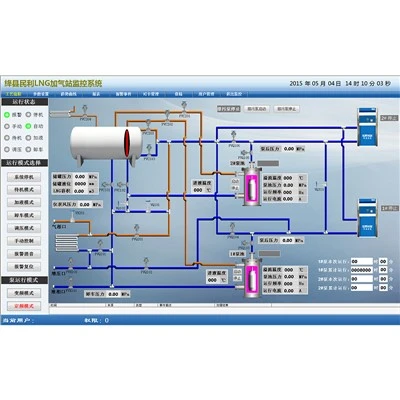
If you’re in the market for a cryogenic storage tank, don’t just look at the upfront price. Ask about the vacuum quality, the number of insulation layers, the support materials, and the expected boil-off rate. Those are the heat transfer characteristics that will make or break your operation down the line. We can walk you through the different designs, help you pick the right size, and even adjust the insulation for your specific environment. Don’t leave your cryogenic products at risk of too much heat transfer—reach out to us today to talk through your needs and get a tank that works as hard as you do.
Gas Station Management System References
- Diller, T. E. (2018). Cryogenic Heat Transfer. CRC Press.
- Code of Federal Regulations, Title 49, Part 173.31, Standards for Cryogenic Liquids Containers.
- European Committee for Standardization (CEN). (2020). EN 13529: Cryogenic Vessels – Insulation, Performance Testing and Requirements.
- Smith, J. I. (2021). Heat Transfer in Multi-Layer Insulation for Cryogenic Applications. Journal of Cryogenic Engineering, 56(2), 112-124.
Chengdu Hi-tech Panda Energy Technology Co., Ltd.
With abundant experience, we are one of the most professional cryogenic storage tank manufacturers in China. Please feel free to buy high quality cryogenic storage tank for sale here from our factory. Also, customized service is available.
Address: No.1604, 16th Floor, Unit 2, Building 1, No.1700, North Section of Tianfu Avenue, Chengdu High-tech Zone, China (Sichuan) Pilot Free Trade Zone
E-mail: Haikepanda-sos@aliyun.com
WebSite: https://www.haike-energe.com/
