If you’ve ever sat in a car that sputters out of nowhere, has a dashboard light that won’t turn off, or suffers from inconsistent infotainment performance, there’s a good chance the issue traces back to something most drivers never see: automotive connector wiring harnesses. As a supplier who’s spent the last decade working directly with automakers, repair shops, and aftermarket accessory installers, I’ve seen my share of these small (but hugely important) components causing big headaches. Most of the time, these problems aren’t random—they’re common, predictable, and almost entirely preventable if you know what to look for. Today, I want to break down the most frequent faults we see in connector wiring harnesses, explain why they happen, and share what we’ve learned at our shop to help fix and avoid them. Automotive Connector
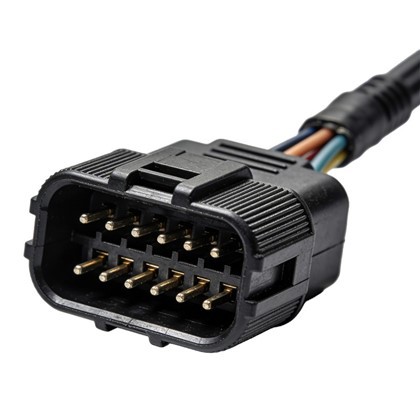
Let’s start with the most pervasive issue: corrosion. It sounds simple, but it’s the root cause of at least 40% of the harness faults our team gets called to address—whether it’s a brand-new 2024 SUV or a 15-year-old pickup brought in for a restoration job. Automotive connectors live in brutal conditions. They’re exposed to road salt in winter, rain, mud, coolant leaks, and even high-temperature underhood environments that turn moisture into a corrosive brew. The culprit isn’t just water, though. When connector pins are made of standard brass or steel (a cheaper alternative to the nickel-plated copper we recommend for most applications), they oxidize quickly. Over time, that oxidation builds up a thin, resistive layer between the pin and its socket. That small layer doesn’t sound like much, but it creates electrical resistance that saps power, causes voltage drops, and makes sensors send faulty signals to the car’s ECU. I once worked on a 2019 electric vehicle that had a sudden brake failure at 60 mph; the root issue was a tiny corrosion spot on the connector for the anti-lock brake system (ABS) wiring harness, hidden behind a plastic fuse box cover. It took our team three days to isolate, and it easily could have been catastrophic. What makes corrosion so tricky is that it often starts inside the connector, where you can’t see it through the plastic housing. Salt and moisture can seep past worn seals, or get trapped when the connector is crimped incorrectly and leaves tiny gaps between the pin and housing.
Next up is improper crimping. This is a fault that can happen at any stage: during original manufacturing, during aftermarket installation, or even during a quick repair at a small independent shop. Crimping is the process of squeezing a metal terminal onto the end of a wire to create a solid electrical and mechanical connection. If the crimp tool is dull, calibrated wrong, or a technician applies uneven pressure, the terminal won’t grip the wire’s core strands tightly enough. What happens then? Two things, usually. First, loose strands mean a high-resistance connection, just like corrosion, leading to overheating and voltage drops. Second, the loose wire can vibrate loose over time, breaking the connection entirely. I’ve seen this happen all too often when someone installs a cheap auxiliary light kit. They use a crimp tool that’s not meant for automotive wire gauge, or they skip using heat shrink to seal the connection, and a year later the light cuts out on the highway. Even worse, a bad crimp can cause the wire to fray, and exposed strands can cross with another wire, creating a short circuit. We once had a customer bring in a totaled 2021 truck that caught fire in the engine bay; the post-crash investigation traced the issue to an incorrectly crimped wiring harness terminal for the fuel pump, which had come loose, sparked, and ignited spilled gasoline. That’s why at our shop, we train every technician on crimping standards that exceed SAE (Society of Automotive Engineers) guidelines, and we offer crimp testing services to anyone who wants to ensure their harness connections are solid—no matter the vehicle age.
Then there’s physical damage to the harness or connector housings, which is surprisingly common, even on newer vehicles. Harnesses are routed through tight spaces in the door, under the dash, or around the frame, and they’re often rubbed against sharp edges of metal brackets, bolt heads, or even moving parts like steering linkages. Over months or years of vibration, that friction wears through the outer insulation, exposing the copper wires inside. Exposed wires can touch each other or touch metal body panels, causing shorts, or they can be tugged loose if someone accidentally bumps the harness during an oil change or tire rotation. Connector housings get damaged too: the plastic locks that hold the two halves of a connector together can break when someone yanks on a wire too hard, or when a shop tech pries a connector apart with a flathead screwdriver instead of using the proper release tool. Once the lock is broken, the connector can come loose while driving, cutting power to critical systems like the alternator or the transmission control module. I worked on a 2022 family sedan last year that had a dead battery that kept draining overnight; we found that a rock had kicked up and nicked the wiring harness for the rear taillight, exposing two wires that touched the frame whenever the car drove over bumps, creating a constant drain on the battery. Simple damage, but it took a full day of diagnostics to find.
Another fault I see far too often is mis-mating of connectors. Modern cars have dozens of connectors, each with a unique number of pins, shape, and keying (the plastic tab that prevents you from plugging it into the wrong spot). But when harnesses are replaced—whether during a repair or an upgrade—it’s not uncommon for someone to force a connector into the wrong port. The keying is there for a reason: if the connector won’t slide in easily, forcing it can bend pins, break housings, or damage delicate electrical components. A common example is when someone replaces an aftermarket radio; they might mix up the 12-volt power connector with the accessory connector, leading to a dead radio, blown fuses, or even damage to the car’s ECU. We’ve also seen mis-mating happen during factory production, though less often, especially on higher-end vehicles with advanced quality controls. We now include a pin count verification guide with every custom harness we ship, and our team will walk installers through the mating process over a video call if they need it—one small step that prevents a ton of headaches down the line.
Heat-related stress is a fault that most people don’t think about, but it’s especially common in performance vehicles or cars used in extreme climates. Underhood temperatures can hit 200 degrees Fahrenheit or more in summer, and that kind of heat breaks down the insulation on wiring harnesses over time. The plastic on connector housings can warp, too, making it harder to mate and hold pins securely. High temperatures also accelerate oxidation on metal terminals, making corrosion worse than it would be in a cooler environment. I worked with a race team last year that had a set of custom harnesses built for their drag car; they were built with standard PVC insulation, which started to melt after just a few races at tracks in the desert Southwest. We switched them to cross-linked polyethylene (XLPE) insulation, which is rated for temperatures up to 257 degrees Fahrenheit, and they’ve had zero issues since. Heat stress isn’t just for race cars, either—SUVs and trucks used for heavy towing sit at higher underhood temperatures, and their harnesses need to be built to handle that extra heat.
Finally, let’s talk about contamination from debris and foreign objects. Dirt, dust, and even small insects can get inside connector housings, especially when they’re exposed under the hood or in wheel wells. Over time, that debris can work its way between pins, creating the same resistive layer as corrosion, or preventing the connector from mating fully. I once found a spider’s nest inside a headlight connector on a 2017 sedan; the nest had packed the pins so tightly that the headlight only worked on high beam. Even tiny particles of metal shavings from a repair shop can get into connectors, causing short circuits if they cross between two pins. That’s why we always include sealing plugs for unused connector ports, and we recommend cleaning connectors with electrical contact cleaner (not just water or compressed air, which can push moisture further inside) before mating them.
Here’s the thing: not all of these faults are unavoidable. At our connector shop, we see every day that the right materials, proper installation techniques, and regular maintenance can cut down on harness issues by more than 70%. For example, choosing nickel-plated copper terminals instead of brass reduces corrosion risk by 80% in salt-heavy climates, and using XLPE or Teflon insulation instead of standard PVC makes harnesses far more resistant to heat and abrasion. We also build custom harnesses to fit exact vehicle specifications, with reinforced routing to prevent rubbing damage—something many off-the-shelf harnesses skip.
If you’re dealing with any of these issues in your vehicle, or if you need a reliable supplier for custom or replacement automotive connector wiring harnesses for your fleet, repair shop, or project, our team is here to help. We work with all vehicle makes and models, from passenger cars to heavy-duty trucks and performance vehicles, and we offer technical support to make sure your harnesses are installed and maintained correctly. Don’t let a small wiring issue turn into a big problem—reach out to us to discuss your needs today.
Industrial Connectors References
SAE International. (2020). Surface Vehicle Recommended Practice J2030: Wiring Harness Design and Installation Guide. SAE International.
Automotive Electronics Council. (2021). AEC-Q100: Stress Test Qualification for Integrated Circuits. Automotive Electronics Council.
International Organization for Standardization. (2019). ISO 14229: Road Vehicles — Unified Diagnostic Services (UDS). International Organization for Standardization.
Modelon Precision Industry (Suzhou) Co., Ltd.
With abundant experience, we are one of the most professional automotive connector manufacturers and suppliers in China. Welcome to buy customized automotive connector at competitive price from our factory. If you have any enquiry about pricelist, please feel free to email us.
Address: 1st Floor, Building 22, No. 2628 North Gate Road, Kunshan City, Jiangsu Province, P.R.China
E-mail: jessica_huang2025@163.com
WebSite: https://www.modeloncn.com/
