When it comes to automotive safety, seat belts are one of the most crucial components. They serve as the first line of defense in protecting passengers during a collision. As a supplier of racing seat belts, I often get asked how racing seat belts compare to stock seat belts, especially in terms of ease of use. In this blog, I’ll dive deep into this topic, exploring the features, pros, and cons of both types of seat belts to help you understand their differences in usability. Racing Seat Belts
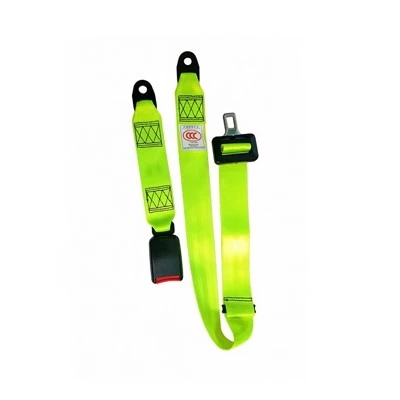
Stock Seat Belts: The Standard Choice
Stock seat belts are the ones that come pre – installed in most vehicles. They are designed to meet basic safety standards set by regulatory authorities around the world. One of the most significant advantages of stock seat belts is their simplicity.
Ease of Buckling and Unbuckling
Stock seat belts feature a straightforward design for buckling and unbuckling. A typical stock seat belt has a tongue that slides into a buckle. The mechanism is intuitive and easy to operate, even for those who are not familiar with automotive safety equipment. Most people can quickly learn how to use a stock seat belt, and it only takes a few seconds to fasten and unfasten them. In daily driving, this simplicity is a huge plus, as it allows passengers to get in and out of the vehicle quickly.
Comfort and Adjustability
Stock seat belts usually come with a certain degree of adjustability. They can be adjusted in length to fit different body sizes, ensuring a comfortable fit for most passengers. Additionally, the materials used in stock seat belts are often soft and flexible, which reduces the pressure on the body during normal driving. This is particularly important for long – distance trips, as it helps to prevent discomfort and fatigue.
Integration with the Vehicle
Stock seat belts are specifically designed to integrate seamlessly with the vehicle’s interior. They are color – coordinated and placed in a position that is easy to reach. The belt retractors are also designed to work smoothly with the vehicle’s movement, providing a continuous and comfortable fit as the vehicle accelerates, decelerates, or turns.
However, stock seat belts also have their limitations. They are designed for general, everyday driving needs and may not be suitable for high – performance or racing applications.
Racing Seat Belts: Designed for High – Performance
Racing seat belts, on the other hand, are engineered for extreme conditions. They are commonly used in racing cars, high – performance vehicles, and off – road vehicles where the forces acting on the driver and passengers are much greater than in normal driving.
Types of Racing Seat Belts
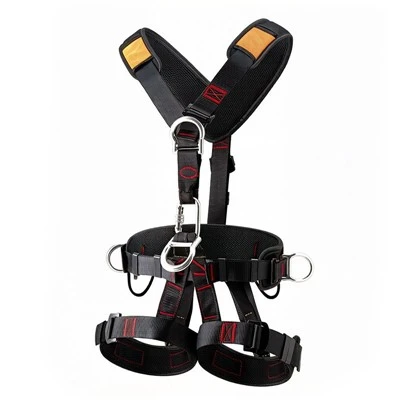
There are several types of racing seat belts, including 4 – point, 5 – point, and 6 – point seat belts. The more points a seat belt has, the more secure it is, as it distributes the forces of impact across a larger area of the body. However, this also means that they are more complex to use compared to stock seat belts.
Complexity of Buckling and Unbuckling
Racing seat belts require more time and effort to buckle and unbuckle. With multiple straps and buckles, each connection point needs to be properly secured. For example, a 5 – point racing seat belt has a lap belt, two shoulder belts, and a crotch strap. Each of these components must be tightened and locked correctly to ensure maximum safety. This process can take up to 30 seconds or more, which is significantly longer than the few seconds it takes to use a stock seat belt.
Adjustability for Performance
While stock seat belts offer basic adjustability, racing seat belts provide a much higher level of customization. They can be adjusted to fit the driver’s body precisely, taking into account factors such as body shape, sitting position, and the type of racing. This high – level adjustability is crucial in racing, as it allows the driver to maintain a stable and comfortable position during high – speed maneuvers. However, this also means that there is a steeper learning curve for users who are not familiar with racing seat belts.
Compatibility with Racing Seats
Racing seat belts are designed to work in conjunction with racing seats. They are attached to the seat and the vehicle’s chassis in a way that maximizes their effectiveness. This means that they may not be as easily adaptable to standard vehicle seats. If you want to install racing seat belts in a regular car, you may need to make some modifications to the seat and the vehicle’s interior, which can be time – consuming and costly.
Comparing Ease of Use in Different Situations
Daily Driving
In daily driving, stock seat belts are clearly the winner in terms of ease of use. Their simplicity allows for quick entry and exit from the vehicle, which is essential for commuting and running errands. The comfort and low – maintenance nature of stock seat belts make them the ideal choice for the average driver. Racing seat belts, with their complex buckling systems and high – level adjustability, would be overkill and a hassle in this context.
Racing and High – Performance Driving
When it comes to racing or high – performance driving, the situation is reversed. The additional safety provided by racing seat belts far outweighs the inconvenience of their more complex use. In a high – speed race, the forces acting on the driver can be several times the force of gravity. Stock seat belts may not be able to provide the necessary restraint in such extreme conditions. Racing seat belts, with their multiple – point design and precise adjustability, are specifically designed to keep the driver safe during these intense situations.
Conclusion
In conclusion, both stock seat belts and racing seat belts have their own advantages and disadvantages in terms of ease of use. Stock seat belts are simple, comfortable, and easy to use in daily driving, making them the standard choice for most vehicles. Racing seat belts, while more complex to use, offer a higher level of safety and adjustability that is essential for high – performance and racing applications.
GM Seatbelts If you are a racing enthusiast or own a high – performance vehicle, and you are looking for reliable and high – quality racing seat belts, I encourage you to reach out to us. We are a professional supplier of racing seat belts, committed to providing the best products and services to meet your needs. Whether you need 4 – point, 5 – point, or 6 – point seat belts, we have a wide range of options to choose from. Contact us to discuss your requirements and start experiencing the difference that our racing seat belts can make.
References
- "Automotive Seat Belt Design and Evaluation" by John D. Carlson
- "Safety Standards for Motor Vehicle Seat Belts" by National Highway Traffic Safety Administration
- "Racing Safety Equipment: A Comprehensive Guide" by Motorsport Publishing Group
Yangzhong Weian Mechanical and Electrical Co., Ltd.
As one of the most professional racing seat belts manufacturers and suppliers in China, we’re featured by quality products and good service. Please rest assured to wholesale racing seat belts in stock here and get quotation from our factory. Customized orders are welcome.
Address: Group 10, Xinhua Village, Xilaiqiao Town, Yangzhong City; West of The Bus Terminal On Yuanqu Avenue.
E-mail: hfsaml_2008@qq.com
WebSite: https://www.weianseatbelt.com/
