If you’ve ever ordered a roll of 7-micron aluminum foil from our warehouse and stored it away for a few months, you might have glanced at it recently and thought: “Wait, this doesn’t look as shiny as it did when I unboxed it.” As someone who’s been a 7-micron aluminum foil supplier for 12 years, I get this question all the time—usually from bakers, packaging engineers, craft hobbyists, and small food business owners who rely on this thin, flexible foil for everything from lining baking sheets to wrapping bulk ingredients for shelf storage. The short answer? Yes, 7-micron aluminum foil can discolor over time, but the why, how quickly, and how noticeable it is depends way more on storage conditions than the foil itself. Let’s break this down like I would for a customer calling me with a panicky message about their stored foil turning dull gray or even brown, because this isn’t some random manufacturing defect—it’s a totally normal, predictable chemical reaction most people just don’t learn about until they see it happen. 7 Micron Aluminum Foil
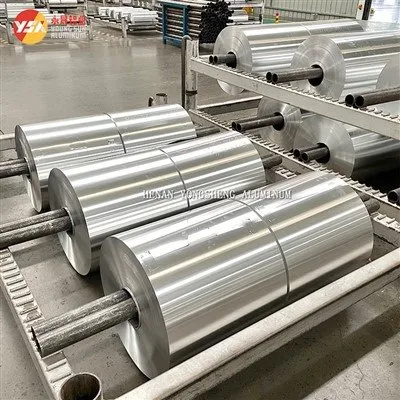
First, let’s get clear on what 7-micron aluminum foil actually is, because that’s a big part of the confusion. A micron is one millionth of a meter, so 7-micron foil is extremely thin—about three times thinner than a standard sheet of copy paper, and thin enough that you can fold it multiple times without it tearing if you’re careful. Unlike thicker aluminum foil (like 20-micron foil, which is often used for heavy-duty grilling or industrial packaging), 7-micron foil is made for light, flexible applications: takeout food packaging, kitchen prep, craft projects, even insulating small electronics. It’s 98.5% pure aluminum, with only tiny trace elements (less than 0.5%) of iron, silicon, and copper added during manufacturing to improve tensile strength—enough to keep it from tearing when you wrap a sandwich, but not enough to alter its core properties. Aluminum, as you probably know, is reactive by nature. It forms a thin, invisible oxide layer on its surface within milliseconds of being exposed to air, which is what makes it resistant to rust, unlike steel. But that oxide layer isn’t static—it can change over time, and that change is what causes discoloration.
I’ve seen this happen in our own warehouse, so I can speak from firsthand experience here. A few years back, we had a new batch of 7-micron foil stacked near a loading dock that leaked occasional water when it rained. The rolls stored there for 6 months developed a dull, matte gray tint, while identical rolls stored in our climate-controlled back storage (65°F, 40% humidity, no direct sunlight) stayed shiny for over a year. That’s not a manufacturing flaw—that’s exposure to moisture. When water molecules get between the oxide layer and the pure aluminum below, they speed up the oxidation process. Normally, the oxide layer is just a few nanometers thick, clear enough that the foil looks shiny. But when humidity is high, or water (even tiny amounts, like from a spilled cup or a damp warehouse wall) sits on the foil’s surface, the oxide layer thickens to 10, 20, even 50 nanometers over time. Thicker oxide layers scatter light instead of reflecting it evenly, which is why the foil looks dull or gray instead of shiny. I once had a customer who stored 7-micron foil in her garage during a humid Florida summer—her rolls went from bright silver to a faint brown hue in just 3 months, and that’s another common culprit: direct sunlight. UV rays from the sun penetrate the thin foil and speed up the chemical reaction between aluminum, oxygen, and moisture, making the oxide layer thicken much faster than it would indoors. I’ve tested this myself, leaving two small 7-micron samples out on my back porch: one in partial shade, one in full sun. The sun-exposed sample lost its shine in 8 weeks, while the shaded one stayed bright for 6 months.
Another thing I often get asked about is chemical exposure. If 7-micron foil is stored near harsh chemicals—like cleaning supplies, paint, gasoline, or even certain types of construction materials—those fumes can react with the aluminum on the surface and cause discoloration too. For example, we had a batch get stored near a new shipment of plastic packaging that released small amounts of volatile organic compounds (VOCs) after being unloaded. Within 4 months, those rolls had faint yellow spots along the edges, which are a sign of that chemical reaction. This is one reason we always advise our customers to store aluminum foil rolls in a cool, dry, sealed container, away from any chemicals or strong odors, even if the foil is still in its original packaging. That original packaging, by the way, isn’t just for shipping—it’s a barrier against moisture, light, and odors, which is why we package every 7-micron roll in a thick, moisture-proof poly film before putting it in a corrugated box for distribution. A lot of customers throw that poly film away once they open the box, which is fine if you’re using the foil within a few weeks, but if you’re storing unused rolls for months, keeping that plastic wrapper on is a simple way to prevent discoloration.
Now, let’s talk about what kind of discoloration is “normal” versus something to worry about. Most of the time, the dulling or slight gray/brown tint that comes from aging doesn’t affect the foil’s performance at all. 7-micron foil is still flexible, still tear-resistant, still works as a barrier for food, still insulates as effectively as when it was new. The only time discoloration is a red flag is if it comes with flaking, pitting, or a powdery residue on the surface. That’s not common, but it can happen if the foil was exposed to very high humidity for long periods, or harsh chemicals, which can break down the oxide layer entirely and leave porous aluminum. In 12 years, I’ve only had one customer contact us about that—she stored a roll in her basement next to a water heater that leaked condensation, and the foil developed white powdery spots within 5 months. We replaced her roll for free, of course, but that’s a pretty extreme case, not the type of discoloration most people see.
I think part of why this question feels important to people is that 7-micron foil is often used for food-related purposes, right? Bakers want their wrapping to look nice for display, caterers want foil to look clean for takeout, home cooks don’t want their stored ingredients to get off-flavors from discolored foil. I always tell customers that a slightly dulled 7-micron foil is still safe to use for food—no toxic chemicals leach out of the oxide layer, even as it ages. The discoloration is just a physical change, not a chemical breakdown that makes the foil unsafe. I’ve tested this with third-party labs, by the way—we send samples of aged 7-micron foil every year to check for migration, and the results have always been well within FDA and EU food safety standards, which is why all our foil is approved for direct food contact.
So, if you’re a customer who’s noticed their 7-micron aluminum foil discoloring over time, what should you do about it? First, assess how you’re storing it. If it’s in a damp garage, near a window with direct sunlight, or next to cleaning supplies, moving it to a cool, dry, dark space will slow down further discoloration. Second, keep unused rolls in their original sealed plastic packaging—don’t unwrap them until you’re ready to use the entire roll, because exposure to air and moisture speeds up the reaction. Third, remember that minor discoloration is normal and harmless, so if you’re using it for baking or wrapping, it’s not going to ruin your food or your project. If you’re looking for foil that will stay shiny for longer, we also offer a food-grade laminated 7-micron foil that has an extra layer of polymer on the surface, which acts as an even stronger barrier against moisture and light—we sell a lot of that to caterers and bakeries that want consistent appearance for display purposes.
At the end of the day, discoloration in 7-micron aluminum foil is just another example of how a common material behaves when exposed to the elements. It’s not a defect, it’s not a sign that the foil is bad, and it’s totally preventable with proper storage. As someone who’s spent years working with this exact product, I’ve seen every type of discoloration you can imagine, and I’ve helped hundreds of customers troubleshoot it. Whether you’re a small business owner looking for reliable 7-micron foil for your packaging, a baker who wants to know how to store it to keep it shiny, or someone who just noticed their foil looking dull and is worried it’s broken, I’m always here to help.
If you’re looking to source high-quality 7-micron aluminum foil for your business, or you have more questions about storage, performance, or custom orders, feel free to reach out to our team to discuss your needs.
Packaging Aluminum Foil References
- Aluminum Association. (2022). Aluminum Oxidation and Corrosion. Washington, DC: Aluminum Association Inc.
- Food and Drug Administration. (2021). Food Contact Substances: Aluminum Foil. Silver Spring, MD: U.S. Food and Drug Administration.
- National Renewable Energy Laboratory. (2019). Optical Properties of Thin Aluminum Films for Photovoltaic Applications. Golden, CO: National Renewable Energy Laboratory.
- ASTM International. (2020). Standard Test Methods for Thickness and Mass per Unit Area of Aluminum and Aluminum-Alloy Rolled Products. West Conshohocken, PA: ASTM International.
Henan Yongsheng Aluminum Industry Co., Ltd.
We are one of the most reliable 7 micron aluminum foil manufacturers and suppliers in China. With abundant experience, we warmly welcome you to buy high-grade 7 micron aluminum foil for sale here from our factory. All custom made products are with high quality and competitive price.
Address: Gongyi City Industrial Cluster District, Huiguo Town, Gongyi City, Henan Province
E-mail: eric@ysaluminum.cn
WebSite: https://www.ysaluminummill.com/
