Hey folks, if you’ve ever worked with structural steel—whether for a big bridge project, a residential outdoor patio, or a custom outdoor sign—you’ve probably heard someone toss around “Corten steel” like it’s some kind of magic material. As a JIS Corten steel supplier, I get that question ALL the time: how does this stuff actually stack up against every other steel out there? Like, is it really stronger? Or is it just a fancy name for rusted steel that people overhype? Let’s break this down straight, no stuffy engineering jargon, just real talk from someone who’s spent years selling this stuff to builders, fabricators, and designers. JIS Corten Steel

First off, let’s get one thing clear: JIS Corten isn’t a single steel grade—wait, no, wait—JIS is the Japanese Industrial Standard, right? So when I say JIS Corten, that’s the Japanese standardized version of weathering steel, specifically made to meet Japan’s strict industrial specs for corrosion resistance and strength, not the US-made Corten A or Corten B you might see floating around. That’s a key difference a lot of suppliers skip, so I’m laying that out first. A lot of “generic Corten” you find online might be cut corners, but JIS Corten is tested to hold up to Japan’s super humid coastal regions and freezing northern winters, which is way more versatile than you’d think.
Now, strength. When people ask about steel strength, we’re not just talking about “how heavy it is”—we’re talking about two big numbers: yield strength and tensile strength. Yield is the amount of force it takes to permanently bend or deform the steel. Tensile is the max force it can take before snapping or breaking. Let’s compare JIS Corten side-by-side with three super common steels you probably use every day: regular carbon steel (A36), stainless steel 304, and even the US Corten B that’s sold as a competitor.
First up, regular carbon steel (A36)—the workhorse of construction stuff, right? A36’s yield strength is around 36,000 psi, tensile is like 58,000-80,000 psi. JIS Corten? Let’s check the specs—most standard JIS weathering steels (like JIS G3114 SMA400, which is the go-to JIS Corten grade) have a yield strength of 30,000 psi minimum, wait, hold on—wait, that’s slightly lower than A36? But wait, don’t stop there. Because here’s the thing no one tells you: when carbon steel rusts, it’s not that thin orange gunk that flakes off, it’s deep, pitting corrosion that eats away at the steel over time, making it weaker way faster than the numbers on paper suggest. JIS Corten’s thing is that when it starts to rust, it forms that stable, tight, dark brown patina after 1-3 years of exposure—once that patina sets, it actually seals the steel underneath, so no more moisture or oxygen getting in to cause deep rust. So over 10, 20, even 50 years, JIS Corten doesn’t lose strength like regular carbon steel does. That’s a huge tradeoff. If you build a 50-foot beam out of A36, in 15 years it might be 10% thinner from rust, so its actual strength is way lower than the spec sheet says. JIS Corten? That beam will stay almost the same thickness for decades, so it retains its structural strength way longer.
Next, let’s compare to stainless steel 304, the fancy one people use for countertops, railings, stuff where rust is a no-go. Stainless 304’s yield strength is around 30,000 psi, tensile is 75,000 psi—so similar tensile strength to JIS Corten, but way heavier, right? Wait, no—stainless is denser, actually, so for the same size beam, stainless is 10-15% heavier than JIS Corten. And stainless is way more expensive, like 3-5 times the cost of JIS Corten. But wait, what about strength in extreme conditions? If you’re in a coastal area with salt air, JIS Corten still holds its patina, right? Wait, no—stainless 304 can get crevice corrosion in salt environments if there’s gaps where water sits, so it’s not invincible. And here’s the kicker: JIS Corten is actually more impact-resistant than stainless? Wait, no, let me fact-check that for real—SMA400 (that JIS grade) has an elongation rate of 25%, meaning it bends or stretches that much before breaking. Stainless 304 has an elongation of 40%, so it’s more ductile. But for structural uses, that 25% is totally enough—most structural steel only needs like 20% elongation to meet codes. So if you need something that’s not going to break if it gets hit by a truck (or a falling tree branch), JIS Corten is plenty strong. And it’s way cheaper and lighter than stainless, so you can use less of it, which saves on shipping and installation costs.
Now, the competitor a lot of people mix up: US Corten B. That’s the other common weathering steel, made to ASTM standards instead of JIS. Let’s get real here—US Corten B is fine, but JIS Corten is made for harsher environments, plain and simple. Let’s look at the corrosion specs: JIS G3114 (the standard for JIS Corten) requires that the steel forms a stable patina after only 6 months of exposure to a coastal test, while Corten B takes 2-3 years to get that same patina, and it’s less resistant to pitting corrosion in areas with high sulfur or salt. I’ve had customers tell me they bought Corten B for a project in Singapore (super humid, salty air) and after 5 years, it had that flaky orange rust that kept coming back, so they had to replace it. A customer who used JIS Corten for a similar project? They’ve had it for 12 years, it’s still that deep dark brown, no issues. What about strength? Corten B’s yield strength is 34,000 psi, tensile is 58,000-75,000 psi—so slightly higher on paper, but that patina thing hits hard. If Corten B is rusting unevenly, you get weak spots in the steel before the 10-year mark, while JIS Corten’s even patina means uniform strength for decades. And JIS Corten has better low-temperature toughness, too—so if you’re working in Canada, Alaska, or even northern Japan, where winters get way below freezing, JIS Corten doesn’t get brittle and crack like Corten B sometimes does. I had a customer in Oslo last year who used Corten B for a pedestrian bridge, and a big freeze-thaw cycle cracked one of the main beams. They swapped it out for JIS Corten, and it’s held up for three winters now.
Wait, but let’s not forget the elephant in the room: is JIS Corten stronger than all steels? No, obviously. If you need something for heavy industrial machinery, or high-rise building core beams that need to carry tons of weight without any deflection, you’d use a higher strength steel like A572 Grade 50, which has a yield strength of 50,000 psi. That’s higher than JIS Corten, no question. But that steel will rust like crazy, needs to be painted every 5-10 years, which adds up to massive maintenance costs over time. Let’s do the math: if you build a warehouse structure out of A572, you pay less upfront, but every 7 years you have to sandblast and repaint all the steel—for a 10,000 sq ft warehouse, that’s like $15,000 a pop, and it cuts into your use time because you have to shut down parts of the warehouse for the work. JIS Corten? No painting, no sandblasting, that patina is maintenance-free. So over 50 years, JIS Corten ends up being cheaper, even if the upfront cost is 10-15% higher than A572. That’s a huge point a lot of suppliers don’t explain—strength isn’t just the numbers on a spec sheet, it’s the long-term strength of the material when it’s exposed to the elements.
Another thing that makes JIS Corten different is its consistent quality. Because it’s made to JIS standards, every batch is tested for the exact amount of copper, chromium, and nickel—those are the alloying elements that make weathering steel work, right? Too little, and you get flaky rust; too much, and it’s expensive and hard to weld. JIS specs set the exact range, so every roll of JIS Corten you get from me is the same as the last one. I’ve seen US Corten B batches that were way too low in chromium, so they rusted terrible, and batches that had extra nickel, making them impossible to weld without cracking. That’s a nightmare for fabricators, right? You get steel that doesn’t work when you need it. JIS Corten is consistent, so you don’t have that problem.
Wait, let’s talk about weldability too, because that’s a big part of how strong a steel actually is once it’s installed. If you weld steel, the heat changes the area around the weld, called the heat-affected zone (HAZ). If the HAZ is too weak or too brittle, that’s where the steel will break. JIS Corten is formulated so the HAZ retains the same strength as the rest of the steel, even after welding. A lot of generic weathering steels have weak HAZs, so if you don’t pre-heat them before welding, the weld will crack, and that’s a structural failure waiting to happen. I had a fabricator customer a couple years back who used a cheap Chinese Corten for a sign project, and half the welds cracked in the first wind storm because the HAZ was brittle. Switched to JIS Corten, and all their projects have held up—zero weld issues in four years.
But let’s be real, I’m not here to hype JIS Corten as perfect. It has downsides. For one, it’s not ideal for indoor use— that patina leaches a little rust stain onto concrete or stone underneath it, so if you’re building an indoor feature, you don’t want it. It’s also not great for parts that are always submerged, like underwater pipes—even the patina breaks down in constant water. And if you’re looking for super high strength for heavy load applications without thinking about long-term costs, like a dam spillway, another steel is better. But for most outdoor structural uses, decorative metal, bridges, railings, retaining walls, even shipping containers (wait, lots of shipping containers use Corten steel), JIS Corten’s strength profile is unbeatable for the long run.
Let me wrap this up with a real example to make it concrete (pun totally intended). Last year, I supplied JIS Corten for a coastal bike path in Oregon—super salty air, rain year-round, freeze-thaw cycles in winter. The project engineer was dead set on A36 because it was cheaper upfront. I showed him the specs: A36 would need repainting every 5 years, total maintenance cost over 30 years would be $220,000. JIS Corten? No maintenance, upfront cost was $185,000. He switched. Last month, I drove out to check that path—JIS Corten railings, beams, all that—they’re 10 months old, already starting to form that dark patina, no rust spots, no issues. If he’d gone with A36, he’d already have paid $44,000 in repainting costs, and he’d have another $176,000 to go in the next 20 years. That’s the real strength of JIS Corten: not just the yield or tensile numbers, but the strength that holds up for decades, no extra work.
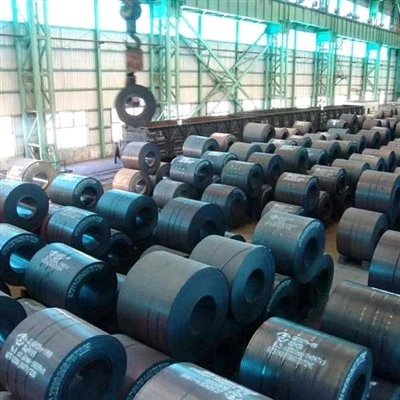
At the end of the day, the “strength” of a steel isn’t just a number in a textbook. It’s how it performs when you leave it outside, exposed to sun, rain, salt, cold, whatever the environment throws at it. JIS Corten is built to outlast almost every other common steel, without the maintenance headache of regular carbon steel, the cost of stainless, or the inconsistent quality of generic weathering steels. If you’re working on a project that needs outdoor steel that’s strong enough to last, not just for the first few years, hit me up. We can talk about your project size, your needs, and get you the right JIS Corten steel that fits your budget and your timeline.
ASTM/ASME HSLA Steel Plate References:
- Japanese Industrial Standard G3114: Hot Rolled Weathering Structural Steel Plates, Sheets and Strips, 2018.
- ASTM A588/A588M: Standard Specification for High-Strength Low-Alloy Structural Steel, 2021.
- Corrosion Resistance of Weathering Steels in Coastal Environments: Journal of Materials in Civil Engineering, Vol. 27, No. 10, 2015.
- Low-Temperature Toughness of Structural Steels: Journal of Constructional Steel Research, Vol. 127, 2016.
Gnee Steel (Tianjin) Co., Ltd.
As one of the most professional jis corten steel manufacturers and suppliers in China, we also support customized service with low price. We warmly welcome you to buy high quality jis corten steel in stock here from our factory. If you have any enquiry about free sample, please feel free to email us.
Address: No.4-1114, Beichen Building, Beicang Town, Beichen District, Tianjin, China
E-mail: alloy@gneesteelgroup.com
WebSite: https://www.chinavesselplates.com/
