If you’ve ever stood next to an engine bay on a 95°F summer day, watching a lawnmower or a work truck idle with a high-pitched whir, you’ve felt one small part doing most of the heavy, unrecognized lifting: the connecting rod. For most people, that rod is just a curved metal link between the piston and crankshaft—until the engine overheats, and suddenly that quiet part becomes the center of every problem: misfiring, stalling, or worse, a full engine rebuild. As a connecting rod supplier, I’ve fielded hundreds of panic calls from customers in construction, agricultural, and automotive sectors who learned this lesson the hard way after a heatwave left their equipment sidelined. What I want to break down today is not just what high heat does to these parts, but why this impact matters for anyone who relies on their machinery to show up when they need it. Connecting Rods
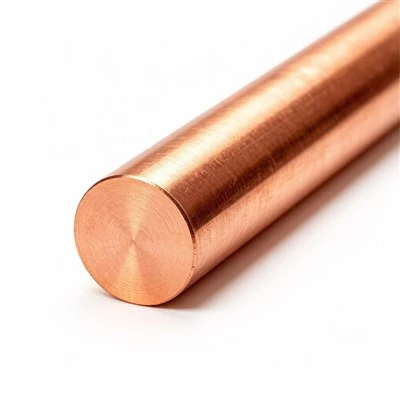
Let’s start with the basics of how a connecting rod works, because that context is everything. When fuel ignites in a cylinder, it expands rapidly, pushing the piston down. The connecting rod transfers that linear motion to a rotational motion in the crankshaft, which is what turns the wheels, blades, or pumps of a piece of equipment. For most of their life, connecting rods operate in a controlled, narrow temperature range—usually between 180°F and 220°F in most gas and diesel engines. This is the sweet spot where the material, usually high-strength steel or occasionally aluminum alloy, performs exactly as it was engineered. The space between the piston and cylinder walls is tight, tolerances measured in thousandths of an inch, so every part moves smoothly without friction generating extra heat. That all changes when external or internal heat pushes temperatures above that range.
First, and most critical, is thermal expansion. Metal expands when heated, but not all parts of a connecting rod expand at the same rate, and not evenly. The rod has two ends: the small end that attaches to the piston pin, and the big end that bolts to the crankshaft. The big end is split, of course, to fit over the crank journal, and it’s machined to a specific diameter when the rod is cold to create that tight, low-friction fit. When temperatures spike—say, to 300°F or higher during a heat-related engine overheat—the big end expands more than the crank journal, and the small end expands more than the piston pin. That gap, which is meant to be minimal, disappears. Suddenly, the piston can’t move up and down freely. Friction skyrockets, generating more heat, creating a vicious cycle. For a farmer running a combine in 100°F weather, that cycle can happen in 10 minutes of missed engine warning signs. I once had a customer call at 5 a.m. during harvest season saying their combine had stopped mid-row; by the time their team towed it to a shop, the connecting rod’s big end had expanded so much that it locked, bending the rod and scoring the crankshaft. The fix cost more than a new connecting rod, all because they’d waited for the heat to pass before checking their equipment.
Next up is material strength degradation, and this is where things get even more serious. Connecting rods are made from steel for a reason—carbon steel, alloy steel, even forged steel, is chosen for its high tensile strength, the ability to pull without breaking, and yield strength, the point at which it permanently bends. But every metal has a melting point, and more importantly, a creep limit. Creep is when a material deforms slowly over time under constant stress, even at temperatures far below its melting point. For steel connecting rods, that creep threshold is roughly 400°F, but it’s not an all-or-nothing line. At 500°F, a rod that’s rated to handle 10,000 psi of force at operating temperature might only handle 7,000 psi. When an engine is overheating, the connecting rod is under constant stress from that expanding gas, so if its strength drops, it can deform. Sometimes that deformation is a small bend, which causes the piston to tilt in the cylinder, leading to uneven wear on cylinder walls and rings. Other times, it’s a full fracture. I’ve seen photos of connecting rods that snapped clean in half after a summer overheat; the fracture wasn’t from a manufacturing defect, it was from the steel losing its ability to hold up under pressure as temperatures rose. Aluminum connecting rods, which some performance customers use, have even lower creep limits—around 300°F—so they’re far more vulnerable in high heat. Last year, a racing client called me in a panic after their sprint car snapped a rod during a heat race on a 92°F track surface; aluminum rods just can’t handle the sustained heat of a race under hot conditions as well as forged steel, and that’s a lesson they won’t forget.
There’s another, less talked about impact of high heat on connecting rods: oil breakdown and contamination. The engine oil that lubricates the rod’s big end and small end isn’t just a slippery fluid—it’s a heat sink, carrying away excess friction and combustion heat from the rod. When temperatures spike, oil can break down chemically. The additives that keep it from oxidizing, that reduce friction, that resist heat, start to break down. If oil breaks down, it gets thinner (or sometimes thicker, depending on the type) and loses its ability to lubricate. That means the connecting rod’s bearing surfaces—thin metal sleeves inside the big and small ends—start to rub directly against the rod and the crankshaft, instead of riding on a film of oil. That friction generates more heat, which makes the oil break down faster, and now you have a grinding, wearing away of the rod’s bearing surfaces. I’ve had customers come to me with connecting rods that have worn grooves in their big end caps, all because their oil had thinned out at 350°F and couldn’t do its job. Worse, when the bearing material wears, those little metal shavings get into the oil, and they circulate through the engine, causing more damage to cylinders, pistons, and other parts. High heat doesn’t just hurt the connecting rod itself—it creates a ripple effect across the entire engine.
It’s not just the extreme, sudden overheats that cause damage, either. So many customers don’t realize that sustained, moderate high heat is just as bad, if not worse, than a one-time spike. If you’re running a fleet of delivery trucks in a desert climate, or a construction crane working in full sun for 12 hours a day in 95°F weather, the engine runs at 250°F to 270°F for weeks on end. That’s below the threshold of what you’d call an “overheat,” but it’s above the ideal operating temperature. Over time, that slow, steady exposure causes cumulative damage: gradual creep in the rod, thinning of the oil, slight warping that adds up until it’s enough to cause misfires or oil leaks. I had a client in Arizona that ran a fleet of 10 utility trucks, and for six months, they thought the occasional misfire was just bad fuel. It wasn’t—their connecting rods were experiencing fatigue from being heated slightly above their designed temperature every single day. By the time they replaced them, they had to replace eight out of 10 rods, all because they didn’t understand that heat damage doesn’t always happen in one big, obvious event.
As a connecting rod supplier, I don’t just talk about problems— I work with customers to solve them, because I know that heat damage is avoidable if you understand what to look for. First, regular temperature checks are non-negotiable. Most modern engines have temperature gauges, but not all operators watch them. A gauge that climbs past 220°F during heavy load on a hot day is a warning sign, not a minor blip. I tell all my customers to pull over and let the engine idle, not shut it off, if the temperature gets too high—shutting off a hot engine can trap heat in the cylinder, making the rod’s problem worse. Second, use the right oil. Not all engine oil is made to handle high heat. Conventional oil breaks down faster than synthetic, especially in sustained high temperatures. I always recommend synthetic motor oil for equipment that runs in hot climates or heavy loads, because it has a higher flash point and resists breakdown better. Third, choose the right connecting rod for your application. If you’re running in extreme heat, don’t cut corners on forged steel rods—they’re built to handle higher temperatures and stress than cast rods, which are cheaper but more prone to bending under heat-related pressure. Last year, a construction customer used cast rods for their new bulldozer to save money, and within three months, two rods bent during summer work. We replaced them with forged alloy steel rods, and they haven’t had a problem since.
I also work with customers on preventive maintenance that targets heat-related rod damage. That means checking cooling systems regularly—radiators, hoses, water pumps—because a clogged radiator can cause overheat even on a cool day. It means inspecting connecting rod bearings during routine oil changes, because early wear from heat is easier to fix than a broken rod. For performance customers, like racers, we recommend upgrading rod bolts as well—high heat can weaken bolt tension, which is what holds the big end of the rod together. If bolts stretch, the rod can come apart completely, which is a catastrophic engine failure that I’ve seen destroy entire engines.
At the end of the day, connecting rods are a tiny part of a massive engine, but their role is irreplaceable. High heat doesn’t just “make them hot”—it changes their shape, their strength, their ability to do the job they’re built for. For anyone who relies on their equipment to work, whether that’s a farmer during harvest, a delivery driver on a cross-country run, or a racer at the track, understanding how heat impacts connecting rods is the difference between a minor adjustment and a full equipment failure.
If you’re dealing with heat-related rod issues, you’re planning for replacement, or you want to upgrade parts to handle extreme temperatures, I’m here to help. We work with customers across sectors to match the right connecting rod to their specific needs, with materials engineered to resist high heat, and guidance on maintenance to keep your equipment running through the hottest days. Reach out to our team to discuss your application, ask questions about material specs, or get a quote for replacement parts that won’t let you down when the temperature rises.
Connecting Rods References:
- Dieter, G. E. (1986). Mechanical Metallurgy. McGraw-Hill Education.
- Taylor, C. F. (1966). The Internal Combustion Engine in Theory and Practice, Volume 1: Combustion, Fuels, Materials, and Design. MIT Press.
- Heywood, J. B. (1988). Internal Combustion Engine Fundamentals. McGraw-Hill Education.
- Society of Automotive Engineers (SAE). (2019). SAE J431: Forged Steel Connecting Rods for Automobiles. SAE International.
Zhejiang Jintai Copper Industry Co., Ltd.
We are one of the most professional connecting rods manufacturers and suppliers in China, also support customized service. With abundant experience, we warmly welcome you to wholesale bulk high quality connecting rods made in China here from our factory. For quotation, contact us now.
Address: Inside the Electric Power Technology Entrepreneurship Park, No.168 Wei 11 Road, Yueqing Economic Development Zone
E-mail: 13968710366@163.com
WebSite: https://www.jintaicopper.com/
