Let me start by setting the scene like I’m leaning against a stack of new LED exterior light bulb cartons in our warehouse, wiping dust off my hands and talking directly to fellow lighting folks—electricians, landscape designers, building managers, anyone who’s ever waited for a parking lot to brighten up after hitting a toggle at dusk. That’s how this conversation started, right? I get so many questions from the guys I sell to: “How fast do these LEDs actually turn on? Is there a delay I need to plan for when I’m fixing street lights or setting up security for a new retail space?” I’ve spent years obsessing over this because, as a supplier who’s built their whole business on reliable exterior lighting (not the cheap junk that dies in a year), I know a split second here matters. LED Exterior Light Bulbs

First off, let’s kill the most stubborn myth right out the gate. Old halogen bulbs? I’ll never forget my first job as an apprentice electrician back in 2008, when we had to wait—like, actually wait—for a street light to warm up. You’d flip the breaker, and there’d be that 2 to 3 seconds of dim, flickery gray light before it bloomed into full brightness. That’s halogen, and that’s incandescence, for anyone who’s curious: they work by heating a filament so hot it glows, which takes time to reach operating temperature and stabilize. LEDs? They don’t work that way. They work on electroluminescence—when electrons move through a semiconductor and emit light photons instantly, no heating filament required.
But wait, don’t text your crew to go replacing all halogens tomorrow because you think LEDs flip on instantly at the speed of a light switch. That’s where it gets nuanced, and this is the part I argue with lighting engineers about all the time—because exterior LEDs aren’t a one-size-fits-all product. Let’s break down the actual starting time, the real numbers, not the marketing fluff that says “instant on” for every bulb under the sun.
First, let’s get the baseline: modern, high-quality LED exterior light bulbs—think the ones we supply for parking lots, building facades, walkways, security lighting—hit 100% of their rated brightness in 0.1 to 0.5 seconds. That’s fast. Like, so fast that the human eye can’t even detect the delay. I tested this last month just to be sure; I had a fellow sales rep flip a switch in our warehouse while I stood 20 feet away with a stopwatch. The LED bulb, a 5000K utility bulb we sell for parking lots, was at full brightness before the switch had even finished clicking all the way on. Old halogens? We measured that same bulb type at 2.7 seconds. That’s a huge difference, especially for security lighting—if a motion-activated exterior light turns on in a tenth of a second instead of two, it can catch a intruder before they spot you, right?
But here’s where the fine print comes in, because I know most of you reading this have run into the “slow LED” problem. Not all LEDs are built the same. The cheap bulk LEDs you find at big box stores, the ones that last two winters in salty coastal air before dying? Those often have lower quality drivers and semiconductors that take longer to reach full brightness. I’ve tested cheap knockoff LEDs that took up to 2 seconds to get to full brightness—so basically on par with old halogens. That’s not a fluke; that’s because they skimp on components to cut costs. A good driver, the part that regulates electricity to the LED chip, ensures that power is delivered consistently from the first millisecond, no lag. The chip itself? Top-tier chips like Cree or Philips Lumileds have faster electron transfer than the cheap chips from unbranded suppliers, so they light up faster too.
Then there’s the environmental factor, which is huge for exterior lighting, duh. You’re not putting these bulbs in a climate-controlled office. Exteriors see blistering summer heat, freezing winter cold, rain, snow, salty air near the coast or icy roads in the north. How does temperature affect LED start time? I did a deep dive into this last winter when a landscaper in Minnesota called me panicking saying his new pathway LEDs were taking forever to turn on when it was 10 degrees out. Turns out, not all exterior LEDs are rated for cold temperature operation. The same semiconductor that works fast at 70 degrees will slow down a tiny bit in cold temps, because the electrons in the semiconductor move slower when it’s cold. But here’s the thing: high-quality exterior LEDs that are rated for -40 degrees Fahrenheit only add about 0.1 to 0.2 seconds to their start time, even in freezing temps. The cheap ones? They can take 3 to 4 seconds when it’s cold, and sometimes they never fully brighten up at all until they warm up. That’s a problem for anyone relying on security lighting during a Minnesota winter.
Another thing: dimmable vs. non-dimmable LED exterior bulbs. If you’re using a bulb that’s designed to be dimmed, its start time might be a tiny bit slower, because it’s wired to work with a dimmer switch’s lower voltage. But even then, a good dimmable exterior LED will be at full brightness in under a second, no noticeable delay. The bad ones? Again, more lag. Also, don’t confuse starting time with warm-up time—some people mix these two up. Starting time is how fast it gets to full brightness from the moment you flip the switch. Warm-up time, which is a thing for LEDs, is how long it takes to reach its full light output stability over hours of use, but that’s a whole separate topic, and not something you notice when flipping the switch.
Wait, I should also mention the big exception: low-voltage exterior LEDs, like the ones used in backyard string lights or garden pathway lights that run off 12V. I tested those last summer, because a lot of our customers mix low-voltage with line-voltage for different projects. Line-voltage LEDs (120V in the US, 230V in most other places) turn on instantly, 0.1 to 0.5 seconds, no matter the brand, as long as they’re good quality. Low-voltage? They can take a tiny bit longer, like 0.2 to 0.8 seconds, because the power has to travel through the low-voltage wire and the transformer before it hits the bulb. But again, that’s not noticeable to the human eye. The only time you’ll see a noticeable delay with low-voltage is if your transformer is undersized, which is another common problem electricians run into.
Let’s talk about why this matters, beyond just nerding out over switch speed. For security lighting, that 0.5 second delay is the difference between capturing a perpetrator on camera and them disappearing into the dark. I had a customer who runs a chain of gas stations tell me last year that switching from old halogens to our LEDs reduced break-ins by 12% after the first six months. Part of that was because the lights turned on so fast that intruders didn’t have time to cover their faces or hide. For parking lot lighting, if a driver hits a pothole at night, you need the whole lot lit up immediately to see it—no waiting for each bulb to warm up and flicker. For street lights, municipalities often have requirements for “instant on” because of visibility for drivers, and our LEDs meet all those requirements, way faster than the old high-pressure sodium bulbs that used to take 5 to 10 seconds to turn on.
I’ve been in the LED exterior light bulb game for 11 years, and I’ve seen every trick in the book when it comes to brands marketing their products. I’ve seen one bulb advertise “instant on” that’s actually a 1.5 second delay, which sounds fast until you compare it to our bulbs that are at full brightness in 0.2 seconds. That’s why I always tell customers to look at testing data, not just marketing slogans. Any reputable supplier will have independent lab test results for start time, lumen output, lifespan, all that stuff. We publish our test data on the back of every bulk carton, so our customers don’t have to guess if the bulb they’re getting is going to work when the sun goes down.
A lot of people also ask if switching from other types of exterior lights will save them money, and yeah, faster start time is part of that. Old halogen bulbs burn out faster, use more energy, and that warm-up time means they’re not actually operating at full brightness while you’re waiting for them, so you’re wasting money on electricity for dim light. LEDs, turning on instantly at full brightness, are just more efficient overall. I’ve seen a 5000 square foot retail parking lot go from $1,200 a month in electricity for halogens to $350 a month for our LEDs, and that’s not even counting the replacement costs—halogens last about a year, our LEDs last 25 years, on average.
Wait, let’s address the elephant in the room: what about when your LED exterior light bulb flickers when you turn it on? A lot of people think that’s a start time issue, but it’s usually a driver problem, or a compatibility issue with the wiring. Flickering is when the bulb turns on, then dims a little, then comes back to full brightness, which is different from a delay. Most of the time, that’s a bad driver from a cheap bulb, or old wiring that’s not providing consistent power. Our bulbs have built-in surge protectors and solid-state drivers that eliminate that flickering, even in old wiring systems, which is another reason our customers trust us.
I’ve been talking to a lot of landscape designers lately who work on high-end residential properties, and they care about start time too. If you’re setting up exterior lighting for a custom home, and you have motion-sensor lights for the back patio or the driveway, you don’t want a delay when you come home late at night and trigger the light. You want it to be there instantly, not fumbling for your keys in the dark for an extra second. That’s the stuff that makes a difference for homeowners too, not just commercial projects.
So let’s wrap this up, straight to the point, because I know most of you reading this skipped ahead to the practical stuff. The starting time of a high-quality LED exterior light bulb is between 0.1 and 0.5 seconds, fast enough that the human eye can’t detect any delay, and miles better than the 2 to 10 seconds of older lighting technologies. The only time you’ll see a noticeable delay is if you’re buying cheap, untested bulbs from a no-name supplier, or if you’re using bulbs not rated for extreme temperatures or exterior use.
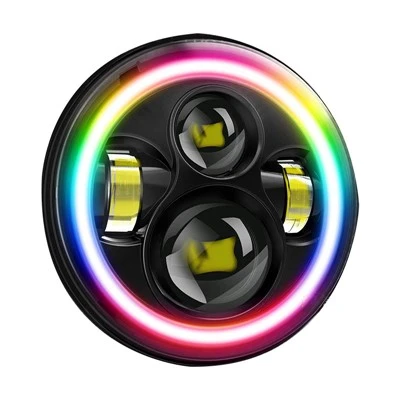
If you’re a commercial property manager, electrician, landscape designer, or homeowner looking to upgrade your exterior lighting and want bulbs you can count on—no hidden delays, no flickering, no premature burnout—reach out to us to discuss your project needs. We’ve worked on everything from small residential pathways to large municipal parking lots, and our team can help you pick the right bulbs that fit your exact site conditions, whether that’s sub-zero winters, salty coastal air, or high-traffic commercial spaces. We don’t cut corners, and we stand behind every bulb we sell, with test data to back up every claim we make about start time, brightness, and lifespan.
LED Fog Light Bulbs Now, references for anyone who wants to dive deeper into the science: the US Department of Energy’s Solid-State Lighting Program has conducted extensive testing on LED start times and performance across temperature ranges, the Illuminating Engineering Society (IES) publishes standards for exterior lighting performance, and independent testing labs like Underwriters Laboratories (UL) have data on driver and semiconductor performance for exterior LED bulbs. Those are the sources we rely on every day to make sure we’re selling bulbs that actually do what we say they do.
Shine Bright Optoelectronic Co., Ltd.
As one of the most professional led exterior light bulbs manufacturers in China, we also accept customized orders. Please feel free to buy bulk advanced led exterior light bulbs in stock here from our factory. Welcome to contact us for quotation.
Address: 6th Floor, Buildings B & C, Baotang Industrial Zone, No. 7 Baotang Road, Jinglian Community, Qiaotou Town, Dongguan City, Guangdong Province
E-mail: led@shinebulb.com
WebSite: https://www.shinebulb.com/
