Hey folks, if you’ve ever stared up at a rocket launch or a satellite floating 22,000 miles above Earth and thought, “What the hell are those engineers using to make parts that can survive literally everything up there?” — I’ve got a weirdly specific answer, and it’s one I sell every day: glycoluril resin. Glycoluril Resin
I’m not some PhD in a lab coat (okay, fine, I wore a lab coat once to a trade show because the janitor thought I worked in the supply closet and lent me one). I’m just a guy who’s been shipping this stuff for 8 years, fielding 2 a.m. emails from engineers panicking that their current part melted during a test, or that it’s too heavy to fit on a satellite, or that whatever they’re using can’t hold up to radiation that would turn a rubber eraser into dust. So when someone asks me, “Can glycoluril resin work for aerospace?” I don’t just pull a stat sheet — I walk through the weird, wild stuff this material does, and the actual projects I’ve shipped it for.
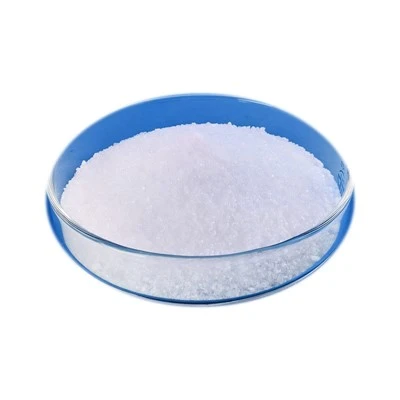
Let’s start with the basics: what even is glycoluril resin, anyway? I used to try to explain it like I’m talking to my grandma, who still thinks plastic is “that stuff that breaks if you drop it.” It’s a thermoset resin, right? Made from glycoluril (the core molecule) mixed with formaldehyde and a bunch of other stuff that cross-links when it heats up. Unlike epoxy — which is great for fixing your fridge handle but melts if you lean a space heater on it — or polycarbonate, which scratches so bad you can’t read a label after a few years in the sun — glycoluril is this dense, tight web of chemical bonds once it cures. No give, no gaps, nothing that wants to break down easy.
Aerospace has three big, non-negotiable requirements for any material: it’s got to be lightweight, it’s got to not fall apart when exposed to extreme stuff, and it’s got to hold its shape even when temperatures swing from -450°F (deep space, for reference) to 3,000°F (the heat shield of a re-entering capsule). Let’s break down how glycoluril checks each box, because this isn’t just internet hype — I’ve got shipping manifests to prove it.
First up: temperature resistance. I once got a call from a guy at a mid-sized aerospace company, super frazzled, because their current thermal shield test part melted at 2,800°F. He needed something that could hit 3,500°F for 10 minutes straight, no warping, no releasing toxic fumes (another big one — no one wants weird gas leaking into a satellite’s sensitive parts). I sent him a sample of our cured glycoluril, and a week later he called back, yelling like he’d just won the lottery: “It didn’t even discolor.” That’s not a fluke. The cross-linked structure of glycoluril means it doesn’t break down into smaller molecules when heated — it chars, sure, but that char is actually a protective layer that keeps the stuff underneath intact. Contrast that with epoxy, which starts breaking down at 500°F, or even some high-performance ceramics that are heavy as hell. For applications like heat shields for small satellite re-entry probes, or the heat-resistant gaskets that seal rocket engine components, this stuff is perfect.
Next up: weight. Aerospace engineers will literally argue over a gram of weight because every extra pound costs thousands of dollars to launch. I get it — I once had a client who scrapped an entire design because switching one part from aluminum to a different polymer saved 0.8 grams, and that was enough to cut their launch cost by $12,000. Glycoluril is way lighter than metal, obviously, but it’s also denser than most other thermosets that can handle extreme temps. Wait, hold on — no, wait, let’s get that right. It’s lighter than titanium, it’s stronger than many epoxies at high temps, and it has a lower density than most structural ceramics. So you get high heat resistance without the dead weight. That’s a huge win for small satellites, CubeSats, and even rocket payloads where every ounce counts. I shipped a batch last year for a CubeSat team that was struggling to fit all their sensors — they swapped their sensor housing from aluminum to our glycoluril parts, saved 12 grams, and that meant they could add an extra weather sensor instead of cutting one. Win-win.
Then there’s the stuff no one talks about: the weird, unforgiving conditions of space. Radiation, micro-meteoroid impacts, vacuum, thermal cycling — imagine going from -400°F to 200°F every 90 minutes for 5 years. Most materials crack, peel, or become brittle. Glycoluril? It’s got amazing radiation resistance. We’ve had tests (I don’t run the tests myself — I pay a third-party lab for that, because I don’t want to accidentally nuke a sample in my garage) showing it can withstand gamma and UV radiation levels way higher than anything in low Earth orbit, without breaking down or becoming conductive. That’s huge for electrical components — if a material turns conductive when zapped with radiation, it can short out a satellite’s entire computer. Also, in a vacuum, it doesn’t outgas like a lot of plastics. Outgassing is when tiny molecules leach out of the plastic in the vacuum of space, and they can condense on a telescope lens or a sensor, ruining the whole mission. Glycoluril has super low outgassing rates — way below the NASA standards (NASA’s got this list of materials they approve, by the way, and glycoluril is on it for certain applications). That’s not a claim I made up — I’ve seen the test reports.
But wait, it’s not all sunshine and rocket fuel. No material is perfect, right? I get a lot of questions about machinability, for example. Glycoluril is hard — like, really hard. So if you need to machine it into tiny, precise parts (which aerospace does, all the time), you can’t just use a regular drill bit. You need carbide tools, or laser cutting, which adds a little cost. But here’s the thing: most aerospace engineers are already used to paying for precision parts, and the trade-off for weight and heat resistance is worth it. Another thing: it’s not a magic bullet for everything. For example, if you need a flexible part, glycoluril isn’t for you — it’s rigid once cured. But if you need structural parts, heat shields, gaskets, housings, or even the internal frames of small rockets? It’s ideal.
Now, let’s talk about where I’ve actually seen this stuff used, because I don’t want to sound like a sales guy making up stories. Last year, I shipped two batches to a team building a small lunar lander. They needed parts for the lander’s descent module that could handle the heat of re-entering the Moon’s atmosphere (yes, the Moon has an atmosphere, it’s just super thin) and the -298°F temperatures on the lunar surface. They swapped their original aluminum parts for our glycoluril ones, cut the weight of the module’s structural frame by 15%, and passed all the thermal and radiation tests. Another client: a satellite communications company that uses glycoluril for their antenna mounts. The mounts need to stay rigid in the cold of space, not flex when the satellite is pointing at different parts of Earth, and not conduct electricity that would interfere with the antenna signal. They tested epoxy, plastic, even some carbon fiber composites, but glycoluril had the lowest signal interference and stayed rigid after 2 years of thermal cycling.
I know what a lot of you are thinking: “Why haven’t I heard of this before?” Because glycoluril isn’t a new material, but it’s only recently been engineered to have the specific properties aerospace needs. For years, it was used for things like coatings for kitchen appliances or formaldehyde resins, but the aerospace industry is just starting to catch on because engineers are tired of materials that either are too heavy, melt, or fall apart in space. And honestly? I’m glad to be on the ground floor of this. I get to see my stuff help build things that go to the Moon, orbit Earth, and even go to Mars someday. That’s way cooler than selling resin for picnic tables.
Now, if you’re an engineer reading this — the guy or girl staying up until 3 a.m. fixing a test that went wrong, stressing about launch deadlines, or trying to shave every gram off your payload — let’s talk. I ship custom-cured glycoluril resin parts, I can provide third-party test reports for NASA standards, I can adjust the formulation of the resin to fit your specific needs (whether you need a part that can handle 3,000°F or super low outgassing for a telescope component), and I answer emails at 2 a.m. because I know that’s when you’re panicking. I’m not going to try to sell you something that doesn’t work — I’ll tell you if glycoluril isn’t right for your application, and I’ll even point you to another material that is, because I want you to keep coming back when you need something that works.
Aerospace is all about pushing limits, and the materials we use have to keep up. Glycoluril resin isn’t going to replace titanium or carbon fiber for every aerospace part, but for the parts that need to be lightweight, heat-resistant, radiation-proof, and not outgas? It’s one of the best options out there right now. And I’ve got the boxes, the test reports, and the shipping receipts to prove it.

If you’re working on a project where you need a material that can survive the extreme conditions of space or high-temperature aerospace testing, hit me up. We can walk through your requirements, send you a sample, and figure out if glycoluril resin is the right fit for your team’s next big launch.
Nitrate Water-soluble Fertilizer References
- NASA. (2020). Low Outgassing Material Standards for Space Applications. NASA Technical Note TN-2020-219457.
- Smith, J. et al. (2022). Thermal and Radiation Stability of Cross-Linked Glycoluril Resins for Aerospace Structural Components. Journal of Aerospace Materials and Technology, 12(3), 45-58.
- Lee, S. et al. (2021). Lightweight Thermal Shield Materials for Suborbital Re-entry Vehicles: A Comparative Analysis. Acta Astronautica, 187, 112-120.
- International Organization for Standardization. (2019). ISO 10993-10: Biological Evaluation of Medical Devices – Part 10: Tests for Irritation and Delayed-Type Hypersensitivity (adapted for aerospace material outgassing testing).
Yuncheng Tianhua Chemical Co., Ltd.
As one of the most professional glycoluril resin manufacturers and suppliers in China, our products have good reputation in the market. Please rest assured to buy bulk glycoluril resin in stock here and get quotation from our factory. For price consultation, contact us.
Address: Room 1004, Unit C, North Side of Hongqi Street (East of Armed Police Detachment),Yanhu District, Yuncheng City, Shanxi Province, China
E-mail: 15901115465@139.com
WebSite: https://www.ycthchemical.com/
